

How Ring Blowers Work – Simple Explanation
Ring blowers, also known as side channel blowers or regenerative blowers, are machines used to move air for pressure and vacuum applications. They are widely used in industries because they are oil-free, reliable, and easy to maintain.
In this blog, we explain how ring blowers work in a simple way so anyone can understand—whether you are an engineer, plant manager, or first-time buyer.
What Is a Ring Blower?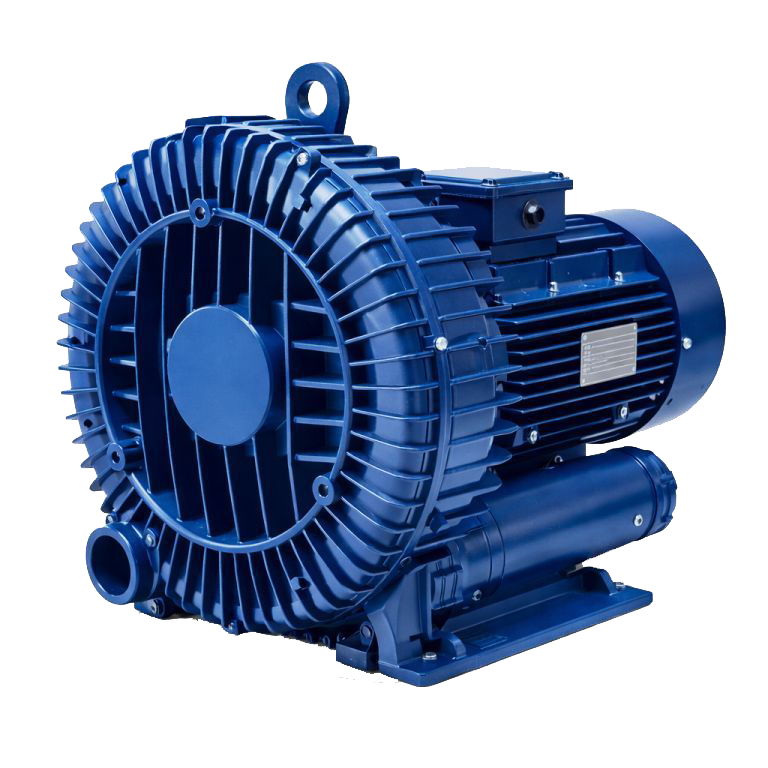
A ring blower is a machine that produces continuous airflow without using oil. It does not compress air like a compressor. Instead, it adds energy to air by moving it in a circular path, increasing pressure or creating vacuum.
Ring blowers are best for applications that need:
- Clean air
- Continuous operation
- Low maintenance
- Quiet performance
Basic Working Principle of a Ring Blower
Ring blowers work on something called the regenerative principle.
This simply means:
Air is moved again and again in a circular path, gaining energy each time it moves.
Because of this repeated movement, air pressure or vacuum increases smoothly.
Step-by-Step: How a Ring Blower Works
Let’s break it down into easy steps:
Step 1: Air Enters the Blower
Air enters the blower through the inlet opening.
Step 2: Impeller Starts Rotating
Inside the blower, there is a fast-rotating part called an impeller.
The impeller spins at high speed and pushes air outward.
Step 3: Air Moves in a Ring Path
The air enters a ring-shaped channel around the impeller.
Here, the air moves in a circular path again and again.
Step 4: Air Gains Energy
Each time the air moves around the ring, it gains more speed and energy.
This increases the air pressure or vacuum level.
Step 5: Air Exits the Blower
Finally, the air leaves the blower through the outlet opening with higher pressure or vacuum.
Diagram Explanation (For Website Images)
Internal Structure Diagram
This diagram shows the motor, impeller, inlet, outlet, and ring-shaped side channel. The circular channel allows air to move repeatedly and build pressure.
Airflow Diagram
The airflow diagram explains how air enters, circulates inside the ring, and exits with increased energy.
Pressure and Vacuum Diagram
This diagram shows how the same ring blower can be used for pressure or vacuum by changing airflow direction.
Main Parts of a Ring Blower
Impeller
The impeller is the rotating part that moves air. It does not touch other parts, which helps keep the blower oil-free.
Side Channel (Ring)
This is the circular path where air moves repeatedly and gains pressure.
Motor
The motor drives the impeller. It is designed for long and continuous operation.
Inlet and Outlet
These openings control where air enters and exits the blower.
Single-Stage vs Double-Stage Ring Blowers
Single-Stage Ring Blower
- Air passes through one ring
- Suitable for moderate pressure or vacuum
- Uses less power
Double-Stage Ring Blower
- Air passes through two rings
- Produces higher pressure or vacuum
- Used for demanding applications
Pressure and Vacuum Operation
Ring blowers are very flexible machines.
- Pressure mode: Supplies clean air for blowing and aeration
- Vacuum mode: Creates suction for lifting, holding, or removing air
The same blower can do both, depending on how it is connected.
Why Ring Blowers Are Oil-Free
Ring blowers do not use oil in the air path because:
- No internal contact between moving parts
- Bearings are sealed
- No lubrication is needed inside the airflow
This makes them perfect for industries where clean air is important.
Energy Efficiency and Low Noise
Ring blowers are energy-efficient for low to medium pressure applications.
They also produce less noise compared to many other industrial blowers.
Noise can be reduced further using:
- Silencers
- Acoustic covers
- Proper installation
Maintenance of Ring Blowers
Ring blowers are easy to maintain.
Basic maintenance includes:
- Cleaning air filters
- Checking bearings occasionally
- Ensuring proper airflow
Because of their simple design, they last long and need very little servicing.
Common Applications of Ring Blowers
Ring blowers are used in many industries, such as:
- Wastewater treatment aeration
- Pneumatic conveying
- Packaging and bottling
- Printing and paper handling
- Medical and laboratory equipment
- Vacuum lifting systems
- Dust extraction
Why Choose Ring Blowers?
Ring blowers are popular because they offer:
- Oil-free operation
- Continuous 24/7 working
- Low maintenance cost
- Compact size
- Pressure and vacuum in one machine
- Long service life
Conclusion
Ring blowers work using a simple regenerative principle that moves air in a circular path to build pressure or vacuum. Their oil-free design, reliability, and ease of use make them a smart choice for many industrial applications.
By understanding how ring blowers work, industries can choose the right solution and improve efficiency with confidence.

Leave A Comment