

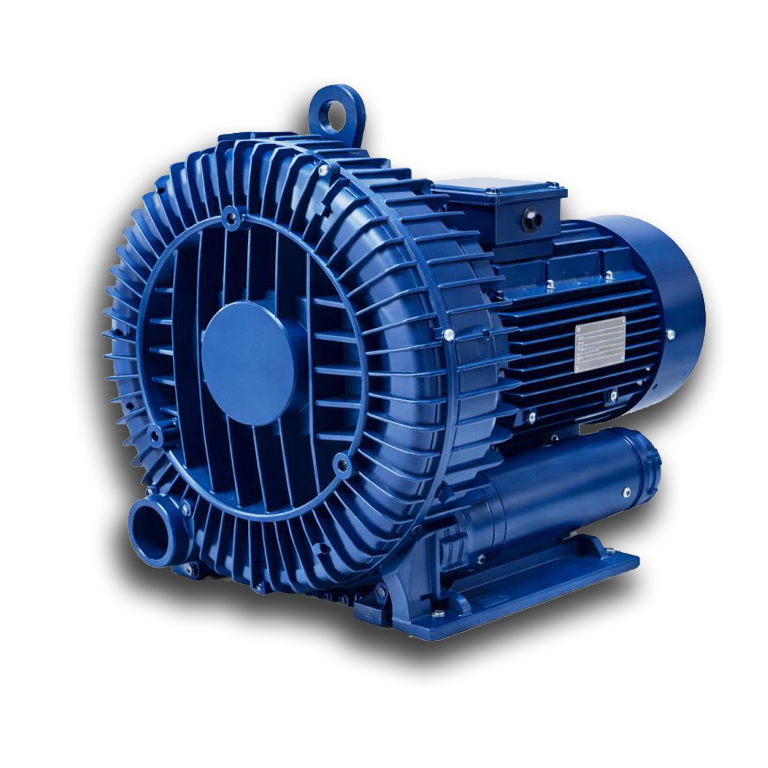
Ring Blowers for Pneumatic Conveying Systems
In modern industries, material movement is as important as production itself. Factories, processing plants, and manufacturing units need safe, clean, and efficient systems to transport raw materials, powders, granules, and products from one place to another.
One of the most effective technologies used for this purpose is pneumatic conveying systems — and at the heart of these systems lies a powerful machine: the ring blower.
Also known as side channel blowers or regenerative blowers, ring blowers are widely used in pneumatic conveying because they provide clean airflow, continuous operation, stable pressure, energy efficiency, and low maintenance.
Understanding Pneumatic Conveying Systems
A pneumatic conveying system moves materials using air instead of mechanical belts or conveyors. Materials are transported through pipes using airflow pressure or vacuum.
These systems are used to move:
- Powders
- Granules
- Pellets
- Food ingredients
- Plastic granules
- Cement
- Chemicals
- Pharmaceuticals
- Agricultural products
Pneumatic conveying systems are preferred because they are:
- Clean
- Safe
- Enclosed
- Dust-free
- Automated
- Flexible
What Is a Ring Blower?
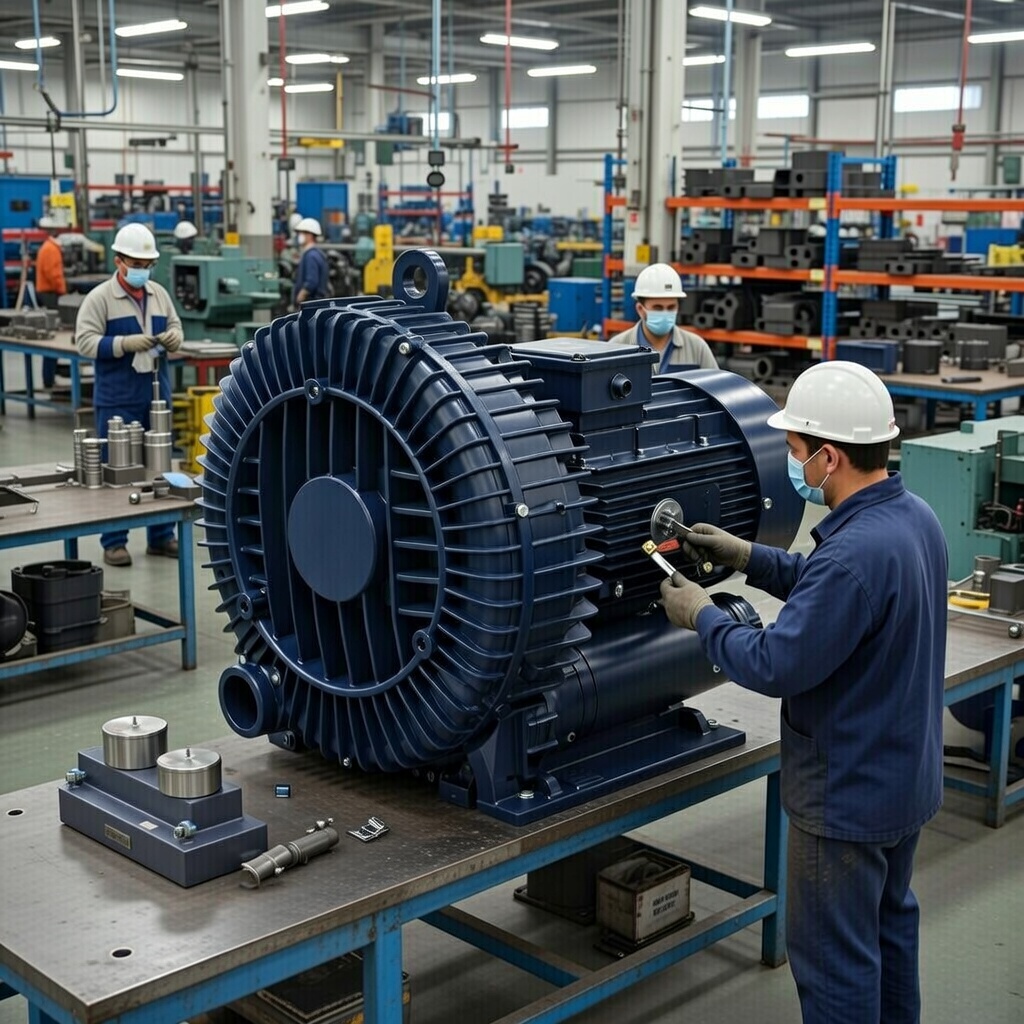
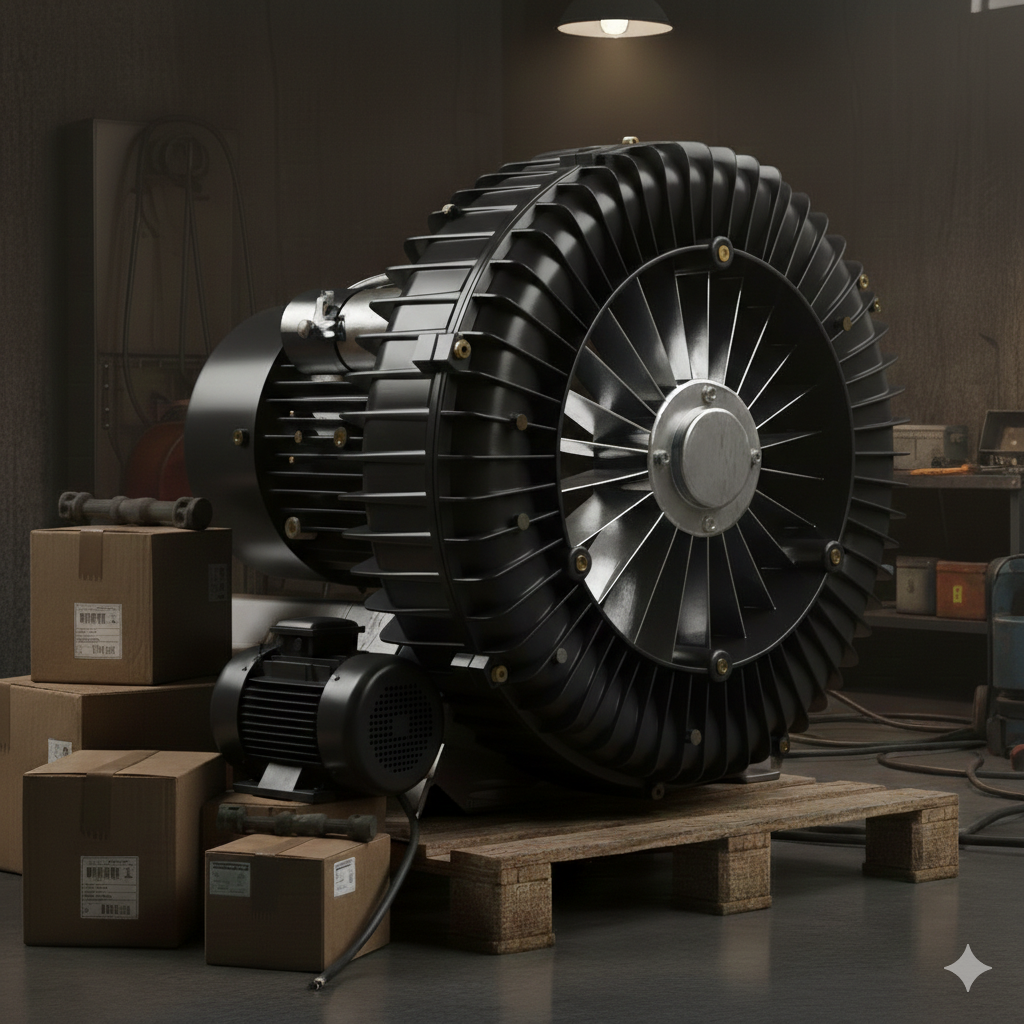
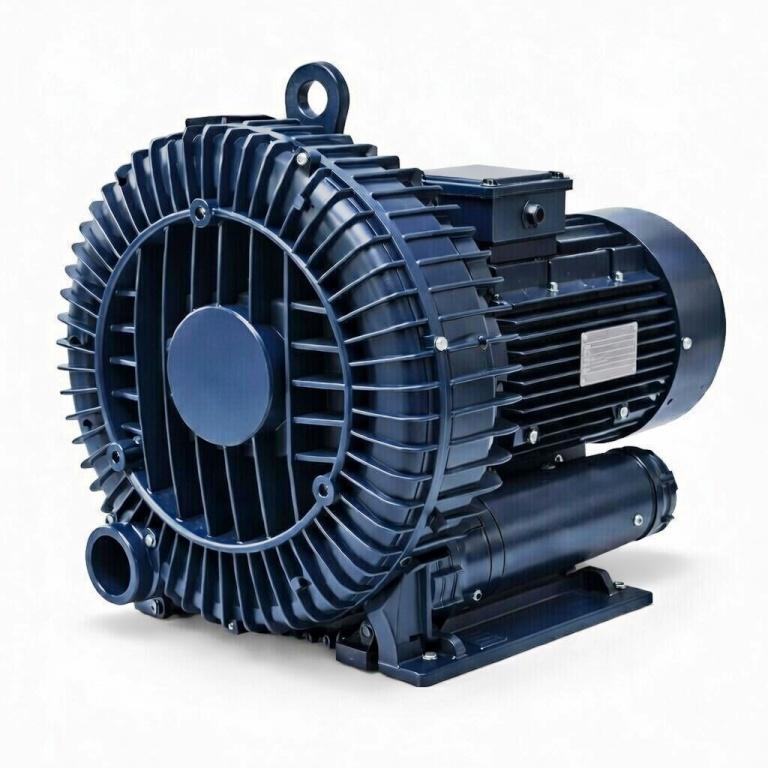
A ring blower is an industrial air machine that moves air using a rotating impeller and a circular airflow path called a side channel.
It works on a regenerative principle where air gains energy gradually as it moves in a circular path, creating continuous airflow.
Ring blowers can be used for:
- Pressure (blowing air)
- Vacuum (suction)
In pneumatic conveying, ring blowers are mainly used to push or pull air through pipelines, moving materials smoothly.
How Ring Blowers Work in Pneumatic Conveying (Simple Explanation)
- Air enters the blower
- The impeller rotates at high speed
- Air moves in a circular ring path
- Energy is added to the air
- Pressurized air moves into the pipeline
- Material is carried by the airflow
- Material reaches the destination point
If used in vacuum mode, the blower pulls air and material through the pipeline instead of pushing it.
Why Ring Blowers Are Ideal for Pneumatic Conveying Systems
1. Oil-Free Airflow
Ring blowers provide 100% oil-free air, which is extremely important for material handling.
Benefits:
- No material contamination
- Safe for food and pharma industries
- Clean conveying process
- No product damage
- No oil maintenance
2. Continuous 24/7 Operation
Pneumatic conveying systems often run continuously in production plants. Ring blowers are designed for non-stop operation, making them perfect for:
- Manufacturing lines
- Processing plants
- Automated systems
- Continuous production units
3. Stable Airflow and Pressure
Ring blowers provide smooth and steady airflow, which is critical for:
- Uniform material movement
- No blockages
- No pipeline damage
- No material fluctuation
Stable airflow improves system efficiency and safety.
4. Energy Efficiency
Ring blowers are efficient in low to medium pressure applications, which makes them ideal for pneumatic conveying systems.
This helps industries:
- Reduce power consumption
- Lower electricity bills
- Improve energy management
- Reduce operating costs
5. Low Maintenance
Ring blowers have:
- Simple design
- Fewer moving parts
- No oil systems
- No complex mechanisms
This results in:
- Easy maintenance
- Low servicing cost
- Less downtime
- Long service life
6. Compact and Space-Saving Design
Ring blowers are compact and lightweight, making them easy to:
- Install
- Integrate into systems
- Mount on machines
- Use in limited spaces
Perfect for OEM machines and factory layouts.
Types of Pneumatic Conveying Systems Using Ring Blowers
1. Pressure Conveying Systems
Ring blowers push air through the pipeline to move material forward.
Used for:
- Long-distance conveying
- Heavy material movement
- Centralized systems
2. Vacuum Conveying Systems
Ring blowers pull air and material through pipelines.
Used for:
- Clean environments
- Short distances
- Sensitive materials
- Dust-free operations
3. Combination Systems
Some systems use both pressure and vacuum for complex conveying needs.
Industrial Applications
Ring blowers in pneumatic conveying are used in:
Food Industry
- Flour transport
- Sugar conveying
- Grain movement
- Spice handling
Plastic Industry
- Granule transport
- Pellet feeding
- Resin conveying
Cement Industry
- Powder transport
- Ash handling
- Fine material movement
Pharmaceutical Industry
- Tablet transport
- Powder handling
- Clean room conveying
Chemical Industry
- Chemical powder movement
- Safe enclosed transport
Agriculture
- Seed transport
- Grain movement
- Feed handling
Single-Stage vs Double-Stage Ring Blowers for Conveying
Single-Stage Ring Blowers
- Low to medium pressure
- Energy efficient
- Small systems
- Short-distance conveying
Double-Stage Ring Blowers
- Higher pressure
- Long-distance conveying
- Heavy-duty applications
- Large systems
Benefits for Industries
Using ring blowers in pneumatic conveying systems provides:
- Clean and oil-free material handling
- Stable conveying performance
- Reduced product loss
- Low maintenance cost
- Long equipment life
- Reduced downtime
- Energy savings
- Better automation integration
- Safe working environment
Choosing the Right Ring Blower for Pneumatic Conveying
To select the right ring blower, consider:
- Type of material
- Particle size
- Conveying distance
- Required airflow
- Required pressure
- Pipe diameter
- System design
- Operating hours
- Space availability
- Power supply
Correct selection ensures:
- Smooth conveying
- No blockages
- Low energy use
- High system efficiency
- Long service life
Common Problems and How to Avoid Them
Blockages in Pipes
Cause: Low airflow or wrong pipe size
Solution: Proper blower selection and correct pipe design
Material Damage
Cause: High pressure airflow
Solution: Controlled airflow and VFD usage
High Energy Consumption
Cause: Oversized blower
Solution: Correct sizing and speed control
Dust Leakage
Cause: Poor sealing
Solution: Proper joints and connections
Preventive Maintenance Tips
To keep systems running smoothly:
- Clean inlet filters
- Inspect pipelines
- Check pressure levels
- Monitor temperature
- Inspect vibration
- Ensure ventilation
- Perform regular inspections
Role of Ring Blowers in Automated Factories
Ring blowers support automation and smart factories by:
- Enabling automated material feeding
- Supporting robotic systems
- Integrating with PLC controls
- Supporting Industry 4.0
- Enabling smart monitoring systems
Environmental and Safety Benefits
Ring blowers support:
- Dust-free environments
- Clean material handling
- Reduced air pollution
- Improved worker safety
- Sustainable operations
- Cleaner production systems
Long-Term Business Value
For industries, ring blowers provide:
- Low life-cycle cost
- High return on investment
- Long operational life
- Reliable performance
- Stable production
- Better product quality
- Lower maintenance expenses
Future of Pneumatic Conveying with Ring Blowers
As industries move towards:
- Automation
- Clean manufacturing
- Energy efficiency
- Smart production systems
- Sustainable operations
Ring blowers will continue to be a core technology in pneumatic conveying systems.
Their reliability, clean airflow, and efficiency make them future-ready machines for modern industrial needs.
Conclusion
Ring blowers are a powerful and reliable solution for pneumatic conveying systems. Their oil-free airflow, stable pressure, energy efficiency, low maintenance, compact design, and continuous operation make them ideal for transporting materials safely and efficiently.
From food and pharma to plastics, chemicals, cement, and agriculture, ring blowers support clean, automated, and efficient material handling systems.
For industries looking for safe, clean, and cost-effective conveying solutions, ring blowers are the perfect choice.

Leave A Comment