

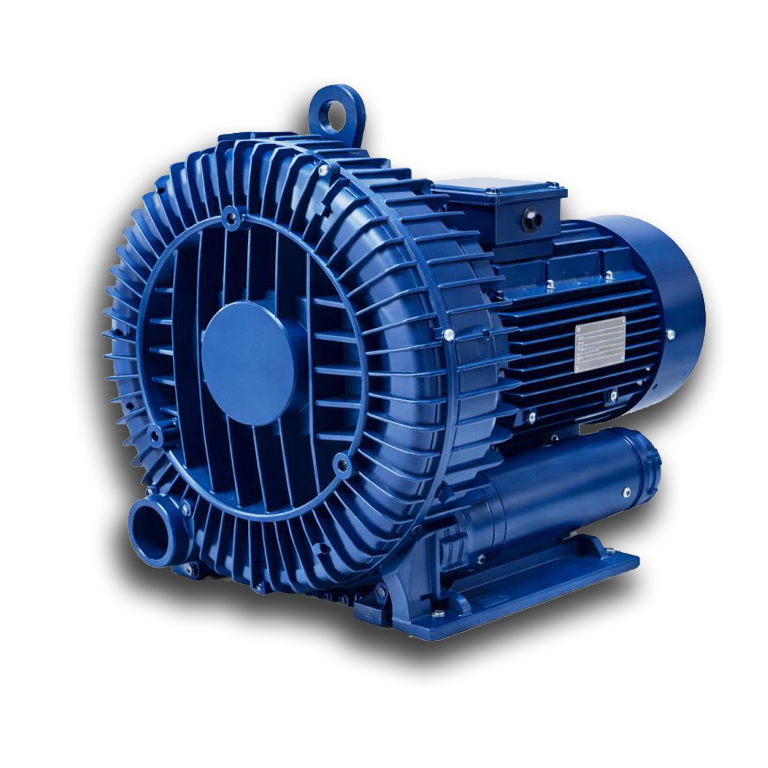
Design and Engineering of Ring Blowers
Ring blowers are one of the most reliable and efficient air systems used in modern industries. They are widely used in manufacturing, packaging, wastewater treatment, printing, construction, food processing, pharmaceuticals, and automation systems.
Behind their simple appearance lies advanced design and engineering that makes them powerful, efficient, and long-lasting.
Understanding the design and engineering of ring blowers helps industries choose the right system for performance, reliability, and long-term value.
What Is a Ring Blower?
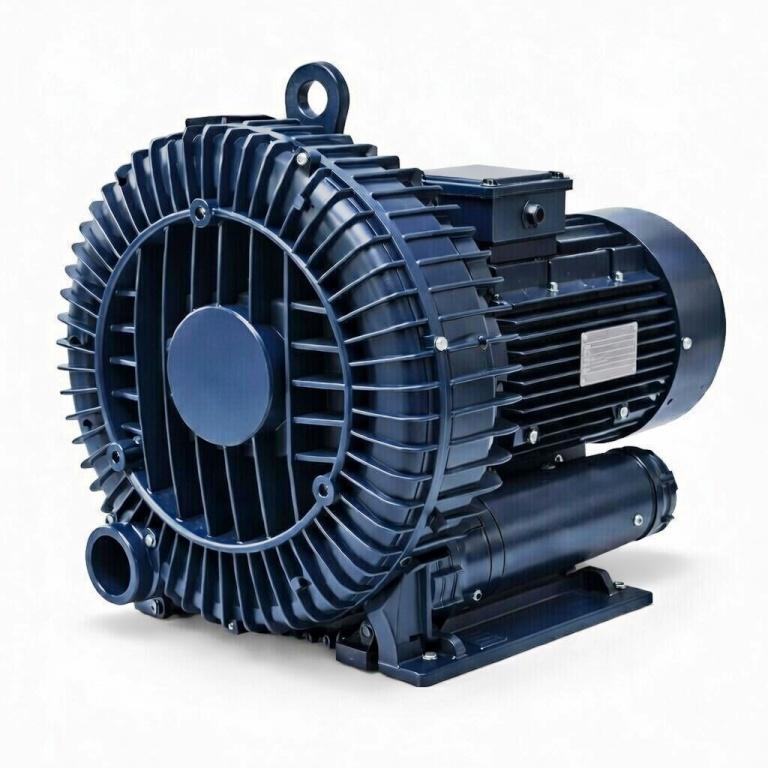
A ring blower (also known as a side channel blower) is an oil-free air blower that creates airflow using a rotating impeller inside a ring-shaped channel.
It works on a simple principle:
- Air enters the inlet
- The impeller rotates
- Air is accelerated in the side channel
- Pressure increases step-by-step
- Air exits with higher pressure and flow
This design allows continuous, stable, and clean airflow.
Core Design Components of a Ring Blower
1. Impeller Design
The impeller is the heart of a ring blower.
Engineering features include:
- Precision-balanced blades
- Aerodynamic blade shape
- High-strength materials
- Corrosion-resistant coating
- Optimized blade angles
The impeller design directly affects:
- Airflow volume
- Pressure generation
- Energy efficiency
- Noise level
- Vibration control
2. Side Channel (Ring Channel) Design
The ring-shaped channel is where air circulates and gains pressure.
Engineering focus areas:
- Smooth internal surfaces
- Optimised channel geometry
- Uniform airflow path
- Low turbulence design
- Balanced pressure distribution
This design ensures:
- Stable airflow
- Low energy loss
- Efficient pressure build-up
- Continuous performance
3. Motor Engineering
The motor powers the entire system.
Engineering aspects include:
- High-efficiency motors
- Thermal protection
- Continuous-duty rating
- Precision shaft alignment
- Low vibration motors
- Energy-efficient winding design
Modern ring blowers use motors designed for 24/7 industrial operation.
4. Bearing System Design
Bearings support smooth rotation.
Engineering focus:
- High-load bearing capacity
- Long-life lubrication
- Heat-resistant materials
- Low-friction design
- Precision alignment
Good bearing design ensures:
- Long service life
- Silent operation
- Low maintenance
- Stability at high speed
5. Cooling System Engineering
Heat control is critical for long life.
Cooling design includes:
- Air-cooling paths
- Heat dissipation channels
- Motor cooling fins
- Thermal airflow design
- Ventilation engineering
This prevents overheating and improves durability.
6. Housing and Structure Design
The blower housing provides protection and strength.
Engineering features:
- Rigid structure
- Vibration-resistant body
- Corrosion-resistant coating
- Dust protection
- Compact structural design
This ensures reliability in harsh industrial environments.
Engineering Principles Used in Ring Blowers
✔ Aerodynamic Engineering
Ensures smooth airflow and pressure generation.
✔ Mechanical Engineering
Ensures strength, stability, and durability.
✔ Electrical Engineering
Ensures efficient motor performance and safety.
✔ Thermal Engineering
Ensures heat control and continuous operation.
✔ Noise Engineering
Ensures low-noise operation.
✔ Energy Engineering
Ensures low power consumption and efficiency.
Single-Stage vs Double-Stage Engineering
Single-Stage Ring Blowers
- Simple structure
- Lower pressure
- High airflow
- Compact design
- Energy-efficient
Double-Stage Ring Blowers
- Two-stage compression
- Higher pressure
- Better performance for heavy-duty use
- Advanced airflow design
- Higher power handling
Oil-Free Engineering Design
Ring blowers are designed as oil-free systems.
Engineering benefits:
- No lubrication in airflow path
- Clean air delivery
- No contamination risk
- Maintenance-free air path
- Safe for sensitive industries
Noise and Vibration Engineering
Modern ring blowers use:
- Precision balancing
- Acoustic design
- Vibration dampers
- Noise insulation
- Silent airflow paths
This ensures quiet operation.
Safety Engineering Features
Ring blowers include:
- Thermal overload protection
- Pressure relief systems
- Over current protection
- Overheating sensors
- Safety cut-off systems
- Electrical protection circuits
Smart Engineering in Modern Ring Blowers
Advanced systems now include:
- Smart sensors
- Digital monitoring
- IoT integration
- Predictive maintenance
- Performance analytics
- Remote monitoring
Ring blowers are becoming intelligent machines.
Engineering Benefits for Industries
Good design and engineering provide:
- Long service life
- High reliability
- Low maintenance
- Energy efficiency
- Stable airflow
- Continuous operation
- Low downtime
- High performance
- Better ROI
Industries Using Engineered Ring Blowers
- Manufacturing plants
- Packaging industries
- Bottling plants
- Food processing
- Pharmaceuticals
- Electronics
- Wastewater treatment
- Construction
- Printing and paper
- Textile industries
Future Engineering Trends in Ring Blowers
Future designs will focus on:
- Smart control systems
- AI-based optimisation
- Digital airflow modeling
- Energy optimisation
- Sustainable materials
- Noise-free operation
- Compact high-power designs
- Green engineering
Conclusion
The performance of a ring blower depends on its design and engineering quality. From impeller design and airflow engineering to motor technology and thermal control, every part plays a role in reliability, efficiency, and performance.
Ring blowers are not simple machines—they are precision-engineered industrial systems.
For industries that demand performance, durability, and efficiency, well-engineered ring blowers are the foundation of reliable operations.

Leave A Comment