

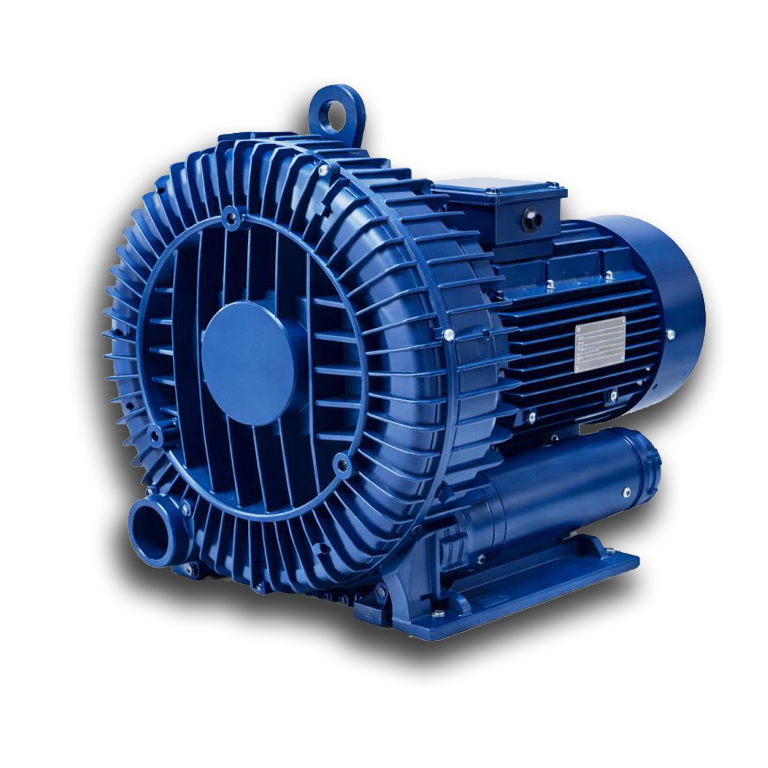
Low-Noise Ring Blowers for Silent Industrial Operations
Introduction
In modern industrial environments, noise reduction is no longer just a comfort issue — it’s a health, safety, regulatory, and productivity priority. Excessive noise can cause worker stress, hearing damage, communication issues, and even compliance penalties. That’s why forward-thinking companies are investing in low-noise ring blowers — air systems engineered to deliver powerful airflow while minimising sound.
In this blog, we explain why low-noise ring blowers are becoming essential equipment for silent industrial operations.
Why Noise Control Matters in Industry
🧠 Worker Health & Safety
High noise levels can cause hearing loss, fatigue, stress, and reduced focus. Many countries regulate acceptable noise exposure limits — non-compliance can lead to penalties.
📈 Productivity
Quiet environments help workers:
- Communicate more clearly
- Focus without distraction
- Work longer without fatigue
- Detect abnormalities by sound
🏭 Compliance with Regulations
Industrial noise regulations (OSHA, EU standards, etc.) require factories to keep noise within specified limits.
🌱 Public Image & Workplace Culture
Quiet workplaces signal professionalism, care, and advanced operations — a benefit for employees, visitors, and clients.
What Makes Ring Blowers Noisy?
Standard blowers generate noise due to:
- High-speed impeller rotation
- Air turbulence
- Mechanical vibration
- Motor resonance
- Exhaust sound
- Structural vibration
Traditional solutions sometimes add silencers — but smart design reduces noise without adding extra equipment.
What Is a Low-Noise Ring Blower?
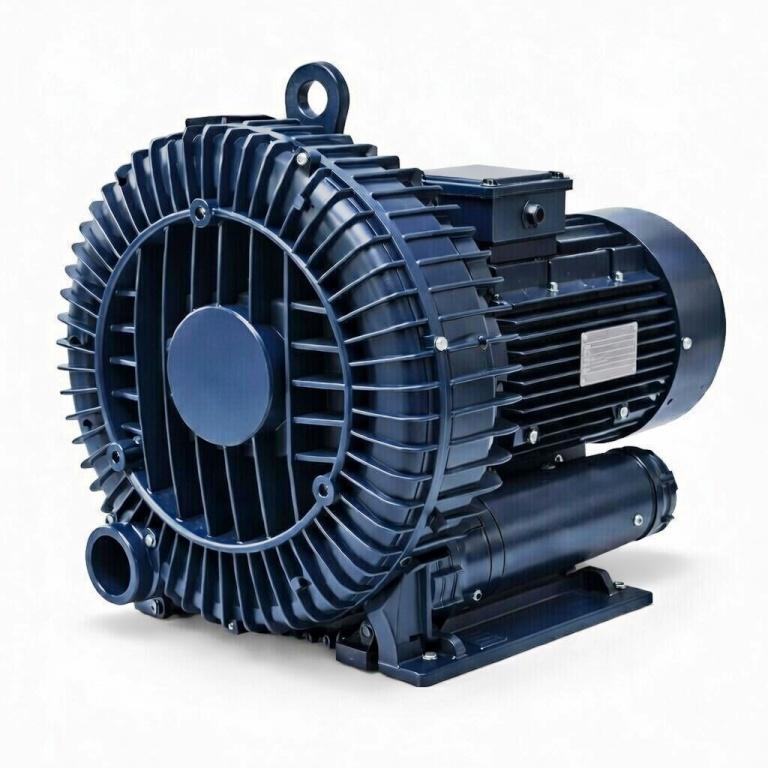
A low-noise ring blower is engineered to produce airflow and pressure like a standard blower, but with features that significantly lower sound output.
These blowers are ideal for:
- Indoor plants
- Clean rooms
- Laboratories
- Offices near production zones
- Health-sensitive environments
- Noise-restricted facilities
Key Noise-Reduction Features in Ring Blowers
🎧 Precision Impeller Design
Optimised blade geometry reduces air turbulence — a major source of noise.
🔇 Balanced Rotors
Precision balancing minimises vibration and mechanical noise.
🛡️ Vibration Dampening Mounts
Special mounts absorb vibration transfer into structures.
📦 Sound-Optimised Housing
Acoustic housings reduce radiated noise from the blower body.
🔄 Smooth Airflow Paths
Advanced airflow channels prevent whistling and pressure spikes.
⚡ High-Efficiency Motors
Motors designed for quiet operation reduce electrical and mechanical noise.
How Low-Noise Ring Blowers Improve Industrial Operations
🧰 Comfortable Work Environment
Lower noise helps workers feel safer and more focused.
📉 Lower Health Risk
Reduced risk of hearing loss and fatigue.
📊 Better Communication
Operators can talk and signal without shouting.
🏆 Compliance Support
Meets workplace noise regulations and standards.
🕒 Extended Operating Hours
Plants can run longer even in shared or sensitive buildings.
💡 Enhanced Productivity
Quiet facilities often record higher workforce efficiency.
Ideal Applications for Low-Noise Ring Blowers
Low-noise blowers are used in:
📦 Packaging and Bottling Lines
Air drying, blowing, vacuum holding — quietly.
🖨️ Printing and Paper Plants
Sheet handling and dust extraction at low noise.
🍽️ Food Processing
Drying, pneumatic movement, and product handling with quiet operation.
🧪 Laboratories
Clean air delivery where minimal disturbance is essential.
🏬 Indoor Manufacturing
Automotive, electronics, plastics — production close to offices.
🏭 Clean rooms and Medical Production
Ultra-quiet air supply in sensitive environments.
Noise Levels Explained (dB)
| System Type | Approx. Noise Level |
| Traditional Blower | 75–90 dB |
| Roots Blower | 80–95 dB |
| Standard Ring Blower | 70–80 dB |
| Low-Noise Ring Blower | 60–70 dB |
✳ 60–70 dB is comparable to normal conversation — ideal for indoor industrial settings.
Single-Stage vs Double-Stage (Noise Perspective)
🔹 Single-Stage Low-Noise Ring Blowers
- Lower sound output
- Best for low-medium pressure
- Compact and quiet design
🔹 Double-Stage Low-Noise Ring Blowers
- Slightly higher sound due to power
- Still quieter than traditional systems
- Supports demanding applications
Both can be tuned for noise performance using silencers and vibration isolation.
Installation Tips for Noise Control
Even the best blower can get noisy if installed poorly.
🔹 Mount on vibration-absorbing pads
🔹 Use flexible connections
🔹 Avoid direct contact with metal structures
🔹 Provide proper ventilation distance
🔹 Use acoustic panels in rooms
🔹 Avoid tight corner installations
Good installation reduces transmitted noise significantly.
Maintenance Tips to Keep Noise Low
Noise can increase if the blower isn’t maintained.
✔ Clean or replace air filters
✔ Check bearing health
✔ Inspect for misalignment
✔ Monitor vibration
✔ Clean airflow paths
✔ Tighten loose bolts/frames
Regular servicing keeps noise low and performance high.
Sustainability and Low Noise
Low-noise blowers often run:
- More efficiently
- At optimal speeds
- With reduced mechanical stress
This supports:
🌱 Lower energy use
🌱 Reduced carbon footprint
🌱 Clean, quiet operations
🌱 Better worker well-being
🎯 A quieter blower also helps companies meet ESG and environmental goals.
Why Manufacturers Are Switching to Low-Noise Ring Blowers
✔ Better worker safety
✔ Higher productivity
✔ Regulatory compliance
✔ Cleaner works paces
✔ Positive brand image
✔ Reduced complaints
✔ Lower health claims
Noise is no longer an expense — it’s a business risk, and low-noise blowers are now part of the solution.
Conclusion
Noise control is no longer optional in industrial settings. With increased focus on worker health, regulatory compliance, operational efficiency, and sustainable manufacturing, low-noise ring blowers are becoming essential equipment.
Whether you’re in packaging, printing, food processing, laboratories, or clean manufacturing, choosing a low-noise ring blower means:
📌 Better work environment
📌 Higher production efficiency
📌 Compliance with regulations
📌 Lower maintenance costs
📌 Sustainable industrial operations
In modern factories, silence is a strength — and low-noise ring blowers are powering that change.

Leave A Comment