

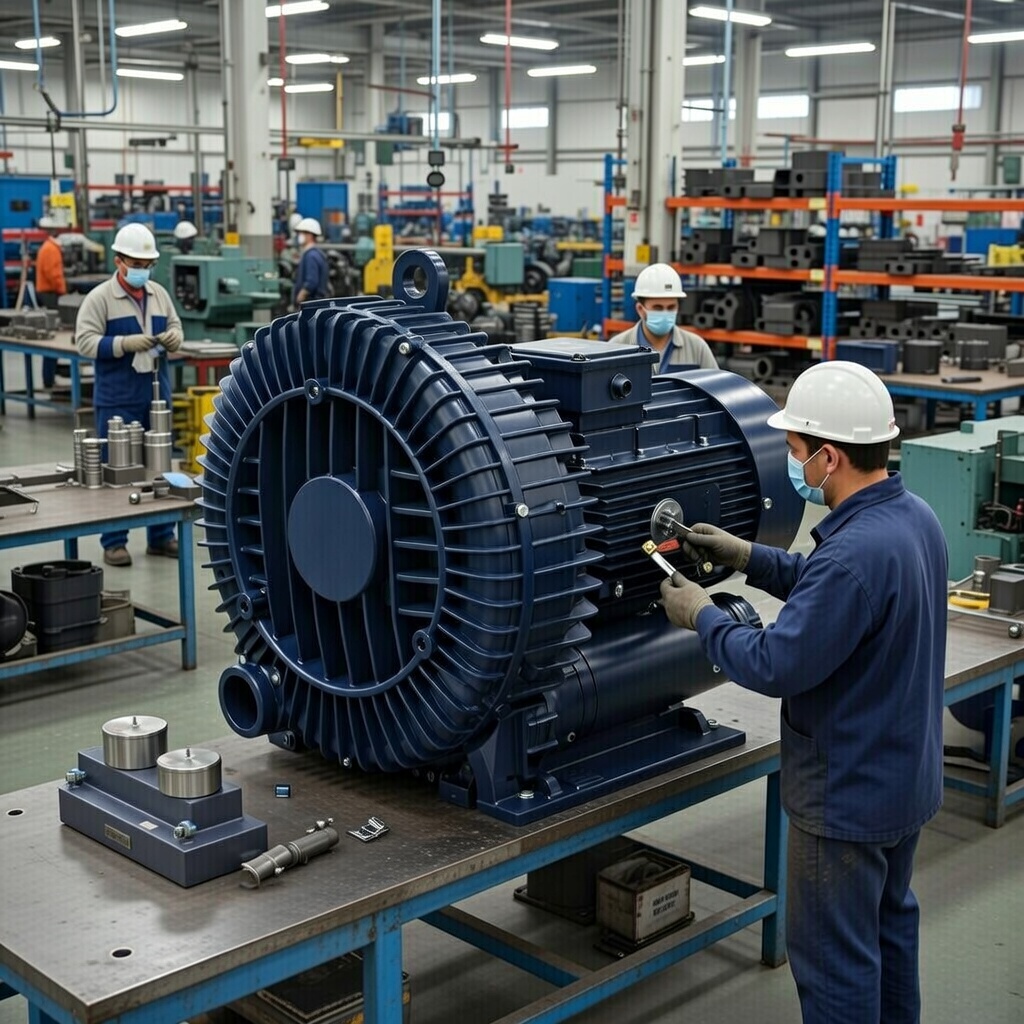
Engineering Innovation in Side Channel Blowers for Modern Industries
Introduction
Modern industries demand more than just airflow — they require intelligent, efficient, reliable, and future-ready air systems. As manufacturing, processing, and infrastructure evolve toward automation, sustainability, and digitisation, air and vacuum technologies must evolve with them.
Side channel blowers have emerged as a critical solution in this transformation, driven by continuous engineering innovation. From advanced aerodynamic design to smart system integration, modern side channel blowers represent a new generation of industrial performance.
This article explores how engineering innovation in side channel blower technology is shaping the future of modern industries.
Evolution of Side Channel Blower Engineering
Traditional air systems focused on basic airflow delivery. Modern engineering has transformed side channel blowers into high-performance industrial systems.
Key Evolution Areas:
- Precision aerodynamic engineering
- Advanced impeller geometry
- Digital manufacturing processes
- Smart material science
- Integrated control systems
This evolution has created highly efficient, reliable, and scaleless solutions.
Advanced Aerodynamic Design
At the core of innovation lies aerodynamic optimisation.
Engineering Advancements:
- Multi-stage impeller configurations
- Optimised side channel geometry
- Reduced turbulence flow paths
- High-pressure regeneration cycles
- Computational flow modelling
These improvements deliver higher efficiency, better pressure control, and smoother airflow.
Regenerative Airflow Technology
Modern side channel blowers use regenerative principles to amplify airflow energy.
Technology Benefits:
- Pulsation-free air delivery
- Continuous pressure generation
- Dual-function capability (pressure & vacuum)
- Stable airflow performance
- High operational consistency
This technology supports precision industrial processes.
Smart Engineering and Digital Integration
Engineering innovation now extends beyond mechanical design.
Smart System Capabilities:
- Sensor-based performance monitoring
- Digital diagnostics systems
- Predictive maintenance integration
- IoT connectivity
- Automation system compatibility
These features enable intelligent air systems for Industry 4.0 environments.
Energy Optimisation Engineering
Energy efficiency is now a core design objective.
Efficiency Innovations:
- High-efficiency motor systems
- Optimised energy transfer paths
- Low-friction airflow design
- Variable speed operation readiness
- Smart power management
These reduce operational costs and environmental impact.
Oil-Free Clean Air Technology
Engineering innovation supports clean industrial processes.
Clean Technology Features:
- 100% oil-free operation
- Contamination-free airflow
- No lubrication systems
- Low maintenance architecture
- Compliance with clean manufacturing standards
This is essential for sensitive industrial applications.
Structural Engineering for Reliability
Reliability is engineered, not assumed.
Reliability Systems:
- Heavy-duty bearing design
- Thermal protection engineering
- Advanced cooling systems
- Reinforced housing structures
- Overload and fault protection
These ensure long-term continuous-duty performance.
Acoustic and Vibration Engineering
Modern plants require safe, comfortable environments.
Noise Control Innovations:
- Precision rotor balancing
- Acoustic flow channel design
- Vibration isolation engineering
- Noise-optimised housings
This delivers low-noise, low-vibration operation.
Modular and Scaleless System Architecture
Engineering innovation supports system flexibility.
Design Advantages:
- Modular construction
- Scaleless configurations
- Compact system layouts
- Easy retrofit integration
- Multi-application adaptability
Applications in Modern Industries
Innovative side channel blowers support:
- Smart manufacturing plants
- Wastewater treatment facilities
- Renewable energy systems
- Semiconductor and electronics production
- Food and beverage processing
- Pharmaceutical manufacturing
- Pneumatic conveying systems
- Packaging and automation
- Recycling and circular economy systems
- Battery and EV manufacturing
Life cycle Engineering Approach
Innovation focuses on full life cycle performance.
Life cycle Benefits:
- Reduced maintenance
- Lower energy consumption
- Extended equipment life
- Reduced downtime
- Stable long-term performance
Sustainability Through Engineering Innovation
Modern engineering aligns with sustainability goals:
- Energy-efficient operation
- Low environmental impact
- Clean air technology
- Long life cycle systems
- Reduced carbon footprint
- ESG compliance
Future of Engineering Innovation
The next phase of side channel blower innovation includes:
- AI-driven performance optimisation
- Digital twin technology
- Autonomous diagnostics systems
- Advanced composite materials
- Carbon-neutral system design
- Fully integrated smart factory systems
Conclusion
Engineering innovation has transformed side channel blowers into intelligent industrial performance systems.
Through advanced design, digital integration, energy optimisation, and reliability engineering, they now form the backbone of modern industrial air and vacuum infrastructure.
Side channel blowers are no longer just machines — they are engineered platforms for industrial innovation, efficiency, and sustainable growth.

Leave A Comment