

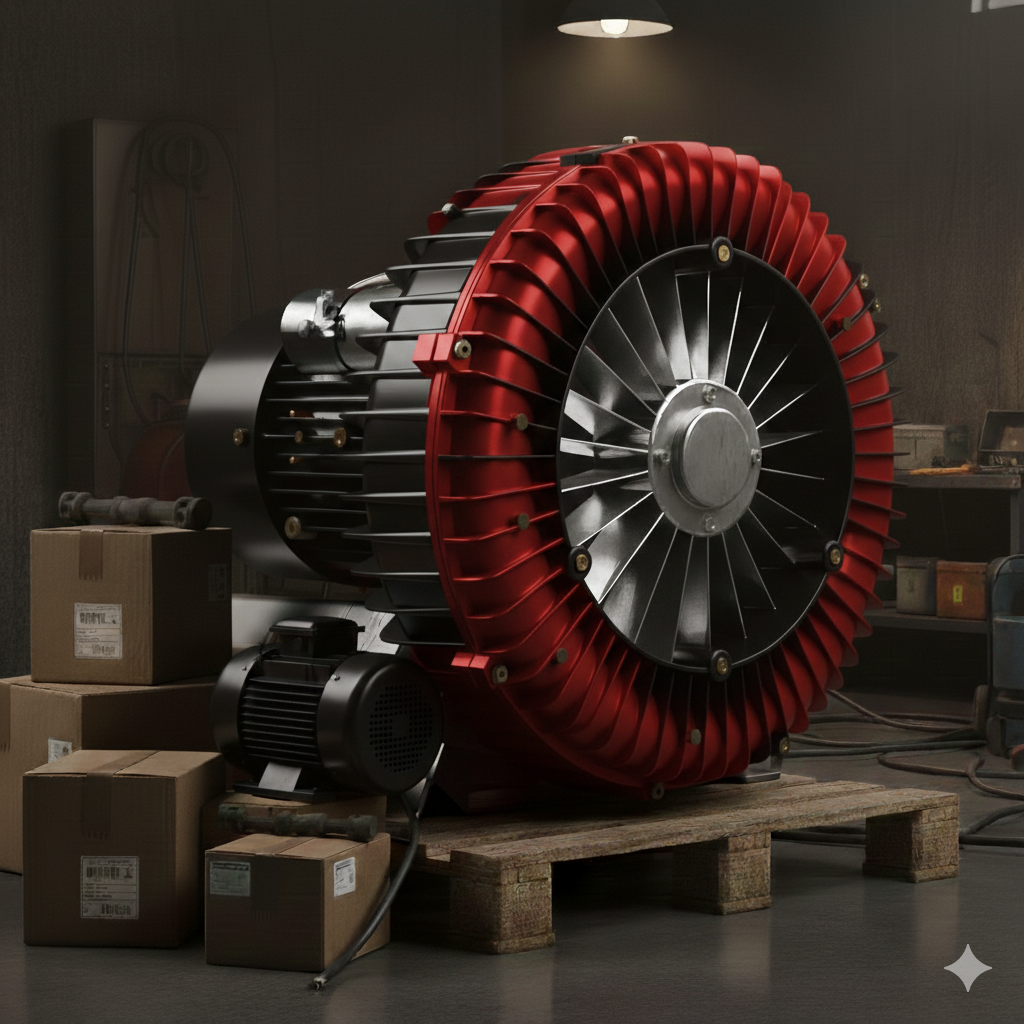
Oil-Free Side Channel Blowers: The Future of Industrial Air Systems
Introduction
Industrial air systems are undergoing a major transformation. As industries shift toward clean manufacturing, sustainability, automation, and smart production, the demand for oil-free, efficient, and intelligent air technologies is increasing rapidly.
Traditional air systems that rely on lubrication, high maintenance, and contamination-prone designs are no longer aligned with modern industrial requirements. In this new era, oil-free side channel blowers have emerged as the future of industrial air systems.
With clean air output, energy efficiency, low maintenance, digital compatibility, and continuous-duty reliability, oil-free side channel blowers are redefining how industries use air as a utility.
Evolution of Industrial Air Technology
Industrial air systems have evolved from basic mechanical devices into smart infrastructure components.
Key Shifts in Industrial Air Systems:
- From lubricated to oil-free technologies
- From maintenance-heavy to low-maintenance systems
- From manual control to smart automation
- From energy waste to energy optimisation
- From isolated equipment to integrated systems
Oil-free side channel blowers perfectly align with these transformations.
What Makes Oil-Free Technology the Future
Oil-free operation is no longer optional — it is a necessity.
Core Advantages:
- Zero air contamination
- No lubrication systems
- Clean process air
- Lower maintenance requirements
- Regulatory compliance
- Safe for sensitive applications
This makes oil-free technology essential for modern industry.
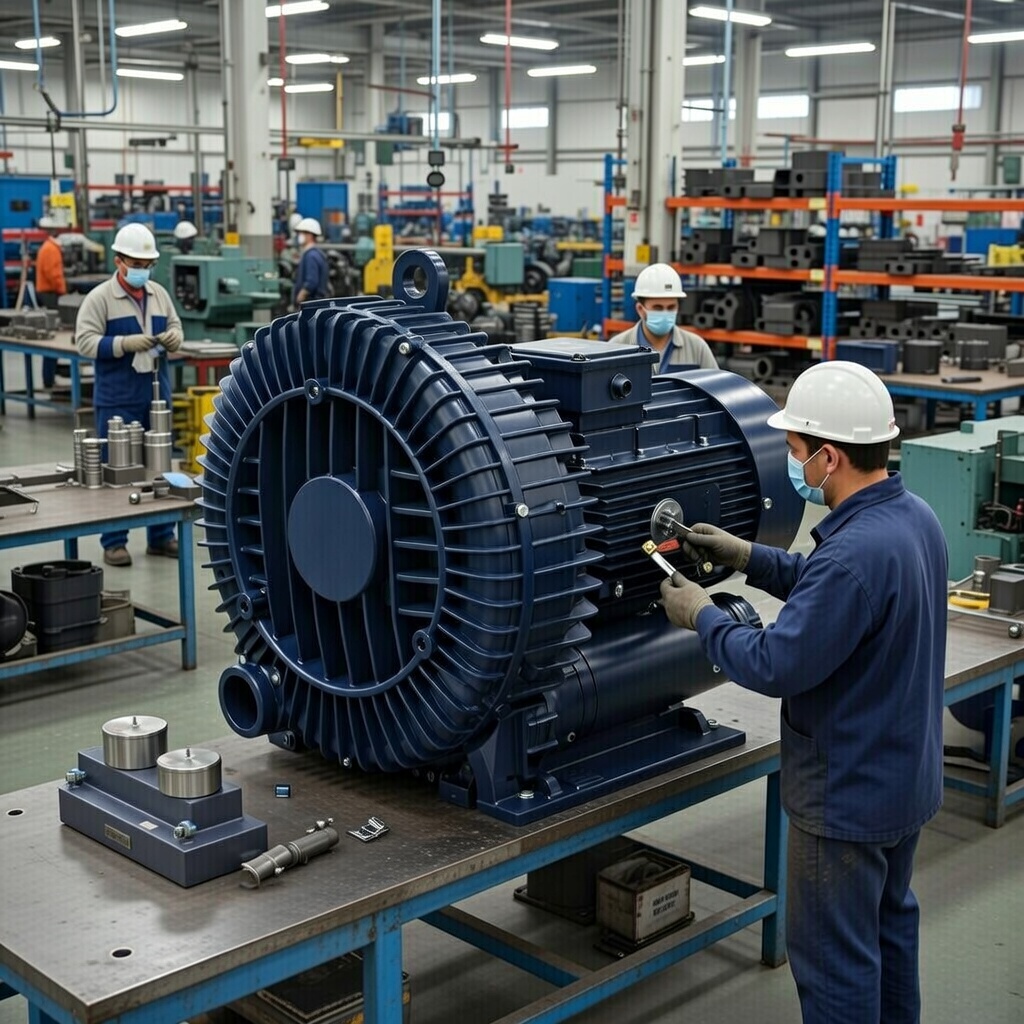
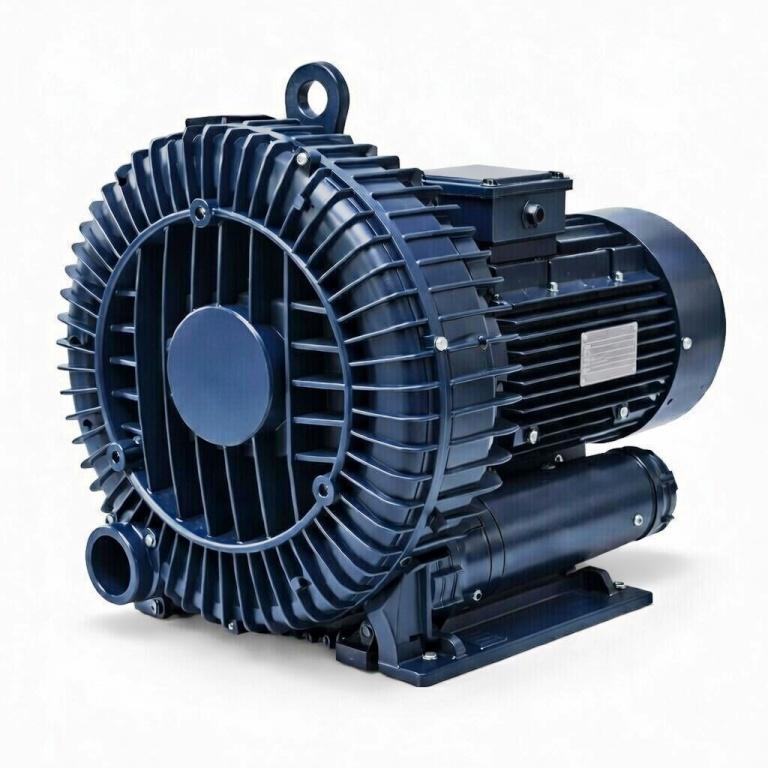
Advanced Engineering Design
Oil-free side channel blowers are built on precision engineering principles.
Engineering Foundations:
- High-efficiency impeller design
- Optimised side channel geometry
- Precision-balanced rotors
- Advanced cooling architecture
- Industrial-grade motor integration
This ensures performance stability and long-term reliability.
Energy Efficiency and Sustainability
Sustainability is a core driver of modern industrial systems.
Sustainability Benefits:
- High energy efficiency
- Reduced power consumption
- Lower carbon footprint
- Long equipment life cycle
- Reduced waste generation
- Support for ESG goals
Oil-free systems support sustainable industrial growth.
Continuous-Duty Industrial Reliability
Modern industries demand uninterrupted operation.
Reliability Features:
- Heavy-duty bearing systems
- Thermal protection mechanisms
- Robust housing structures
- Efficient cooling systems
- Overload protection
These features ensure stable 24/7 performance.
Smart Manufacturing Compatibility
Oil-free side channel blowers are designed for Industry 4.0.
Smart Capabilities:
- Sensor integration
- Digital monitoring systems
- Predictive maintenance readiness
- Automation system compatibility
- Smart energy management integration
They become intelligent components of smart factories.
Low Noise and Low Vibration Performance
Modern factories require safe and comfortable work environments.
Engineering Features:
- Precision balancing
- Acoustic optimisation
- Vibration isolation systems
- Noise-dampening structures
This ensures regulatory compliance and worker safety.
Compact Design and Modular Integration
Space efficiency is critical in modern facilities.
Design Benefits:
- Compact footprint
- Modular configurations
- Flexible installation options
- Easy retrofit integration
- Scaleless system design
Industrial Applications
Oil-free side channel blowers power multiple industries:
- Food and beverage processing
- Pharmaceutical manufacturing
- Electronics and semiconductor
- Medical and healthcare systems
- Wastewater treatment
- Aquaculture
- Packaging and printing
- Pneumatic conveying
- Textile processing
- Renewable energy systems
Life cycle Value Advantage
True system value is measured over time.
Life cycle Benefits:
- Low maintenance cost
- Reduced downtime
- Long service life
- Energy savings
- Operational stability
The Future of Industrial Air Systems
Future developments include:
- AI-based diagnostics
- Autonomous system control
- Digital twin integration
- Smart sensor ecosystems
- Advanced materials
- Energy optimisation algorithms
- Carbon-neutral air systems
Conclusion
Oil-free side channel blowers represent the future of industrial air systems.
By combining clean air technology, energy efficiency, digital intelligence, continuous reliability, and sustainable design, they deliver air solutions that meet the demands of modern and future industries.
They are not just air machines — they are strategic industrial infrastructure technologies that power clean manufacturing, smart production, and sustainable industrial growth.

Leave A Comment