

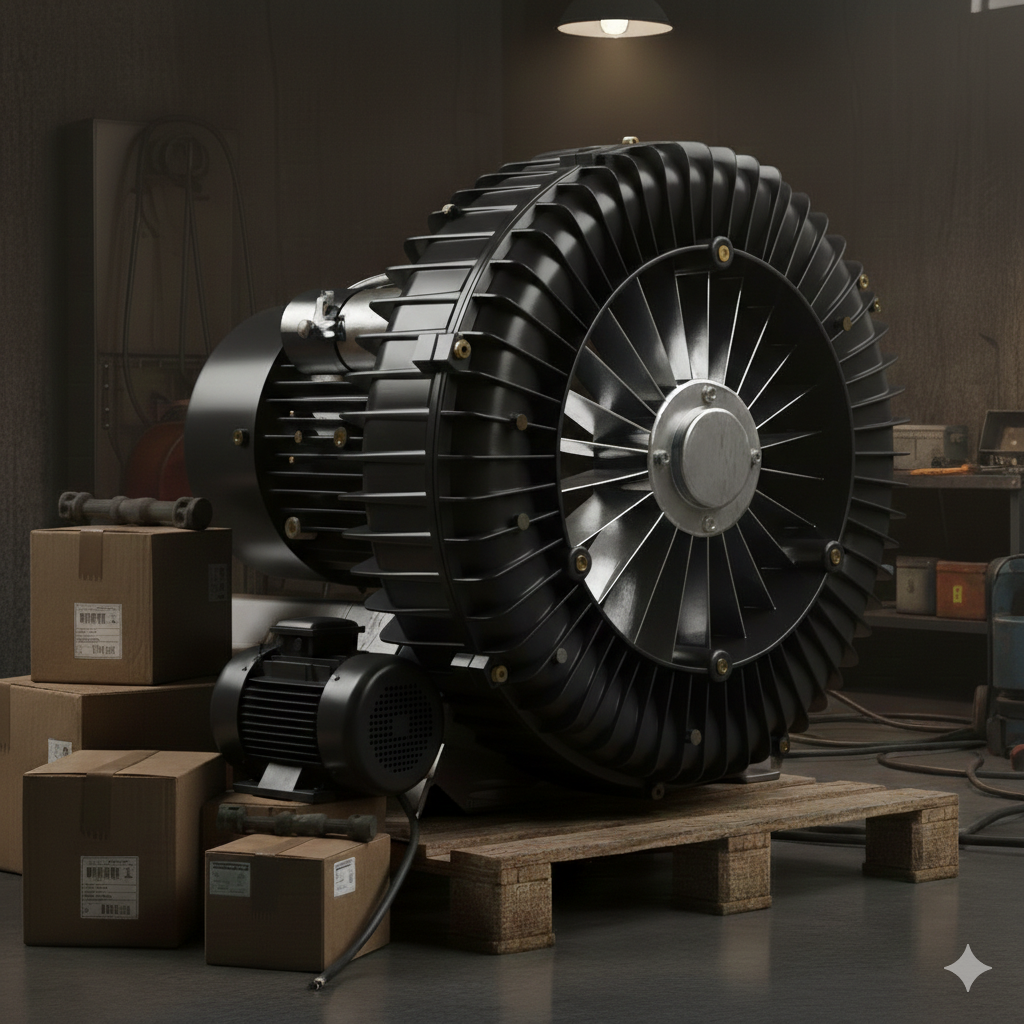
Optimising Material Transfer with Ring Blower Technology
Material transfer is one of the most important processes in industrial operations. Whether it is powders, granules, pellets, sheets, packaging materials, or finished products, efficient material movement directly affects productivity, safety, quality, and operational costs.
Ring blowers (side channel blowers / regenerative blowers) play a critical role in optimisation material transfer systems by providing stable airflow, controlled pressure, and reliable vacuum performance.
This blog explains how ring blower technology optimises material transfer in a simple and practical way.
Why Material Transfer Efficiency Matters
Poor material transfer causes:
- Production delays
- Material losses
- Product damage
- Energy waste
- Dust generation
- Safety risks
- Equipment wear
- Process instability
- High maintenance costs
Efficient transfer systems solve these problems.
Role of Ring Blowers in Material Transfer
Ring blowers provide:
- Stable airflow
- Controlled pressure
- Reliable vacuum
- Continuous operation
- Oil-free air
- Energy efficiency
- Low maintenance
- Compact design
- Quiet operation
These features make them ideal for transfer systems.
Types of Material Transfer Using Ring Blowers
🔹 Pneumatic Conveying (Pressure Mode)
Materials are pushed through pipelines using airflow.
Used for:
- Powders
- Granules
- Pellets
- Cement
- Flour
- Chemicals
- Plastic resins
🔹 Vacuum Conveying (Suction Mode)
Materials are pulled through pipelines using suction.
Used for:
- Fine powders
- Fragile materials
- Clean room applications
- Dust-free transfer
- Hygienic transport
🔹 Vacuum Handling Systems
Used for:
- Sheet handling
- Carton lifting
- Packaging materials
- Product transfer
- Pick-and-place systems
How Ring Blowers Improve Transfer Efficiency
⚙ Stable Airflow Control
Ensures smooth, continuous material movement.
🔄 Consistent Pressure & Vacuum
Prevents material blockages and surging.
🌬 Clean Air Delivery
Prevents contamination in food, pharma, and electronics.
📉 Low Energy Consumption
Reduces operating costs.
🛠 Low Maintenance Design
Improves system uptime.
🧠 Smart Control Integration
Supports automation and digital control.
System Optimisation Techniques
🔹 Proper Blower Sizing
Match airflow and pressure to material type.
🔹 Pipeline Design Optimisation
- Correct pipe diameter
- Smooth bends
- Minimum joints
- Low friction surfaces
🔹 Flow Control Systems
Use regulators and VFD control.
🔹 Leak Prevention
Maintain airtight systems.
🔹 Material Compatibility
Design airflow according to material density and size.
Automation Integration
Modern material transfer systems use:
- PLC control
- Sensors
- Smart controllers
- IoT monitoring
- Automated valves
- Digital dashboards
This enables intelligent transfer systems.
Applications Across Industries
🏭 Manufacturing
Raw material handling and processing.
🍞 Food Processing
Flour, sugar, grains, powder transfer.
💊 Pharmaceuticals
Clean powder handling and sterile transport.
🧪 Chemical Industry
Controlled material movement.
📦 Packaging Industry
Product transfer and automation.
🧱 Cement Industry
Bulk material handling.
⚡ Electronics Industry
Clean material transfer.
Energy Efficiency Benefits
Optimised systems deliver:
- Lower power use
- Reduced air loss
- Efficient flow paths
- Smart load management
- Sustainable operations
Safety & Cleanliness
Ring blower systems improve:
- Worker safety
- Dust control
- Clean production
- Process hygiene
- Contamination prevention
- Workplace environment
Future of Material Transfer
Future systems will use:
- AI-driven airflow control
- Smart sensors
- Predictive maintenance
- Autonomous material transfer
- Digital twin modeling
- Intelligent automation
- Energy-optimised networks
Business Benefits
📈 Higher productivity
📉 Lower operational cost
🛠 Reduced maintenance
🔁 Reliable operations
⚙ Stable processes
🌱 Sustainable manufacturing
🏭 Long equipment life
📊 Process efficiency
🔒 Operational safety
Conclusion
Optimisation material transfer with ring blower technology transforms industrial processes into efficient, clean, reliable, and automated systems.
Ring blowers turn air into a controlled industrial force that enables:
- Smooth material movement
- Safe handling
- Energy efficiency
- Clean production
- Automation readiness
- Process stability
In modern industry, material movement is not just logistics —
It is productivity.
And ring blowers are the systems that power it.

Leave A Comment