

Ring Blowers vs Traditional Blowers – Which Is Better for Modern Industry?
In industrial air systems, blowers play a critical role in moving air, generating pressure, and creating vacuum. For many years, industries depended on traditional blowers like centrifugal blowers, roots blowers, and piston compressors. But today, ring blowers (side channel / regenerative blowers) are rapidly becoming the preferred choice in modern industrial applications.
This blog explains in simple language the difference between ring blowers and traditional blowers, their working principles, advantages, and why industries are shifting toward ring blower technology.
Understanding the Two Technologies
🔹 What Are Ring Blowers?
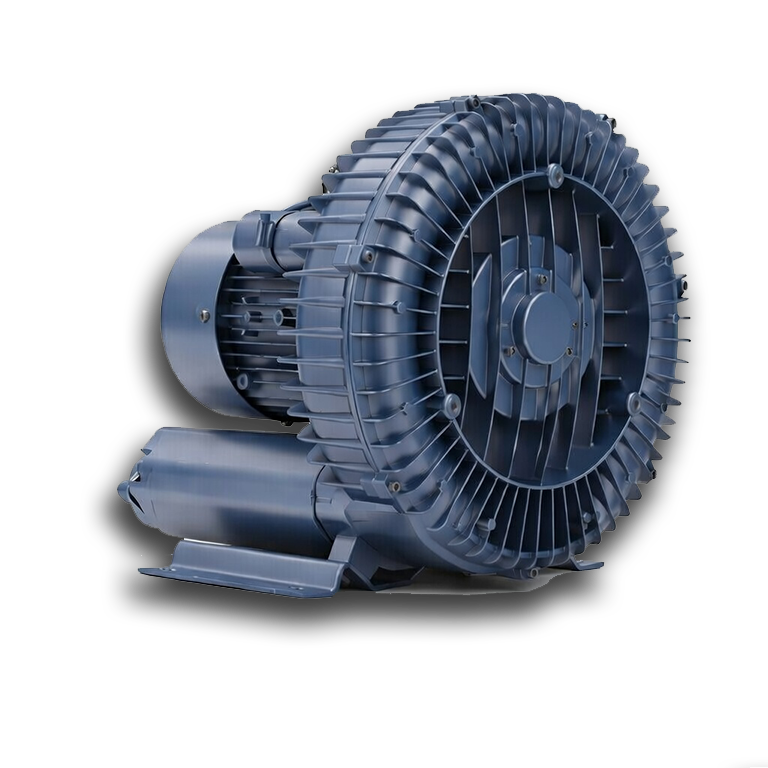
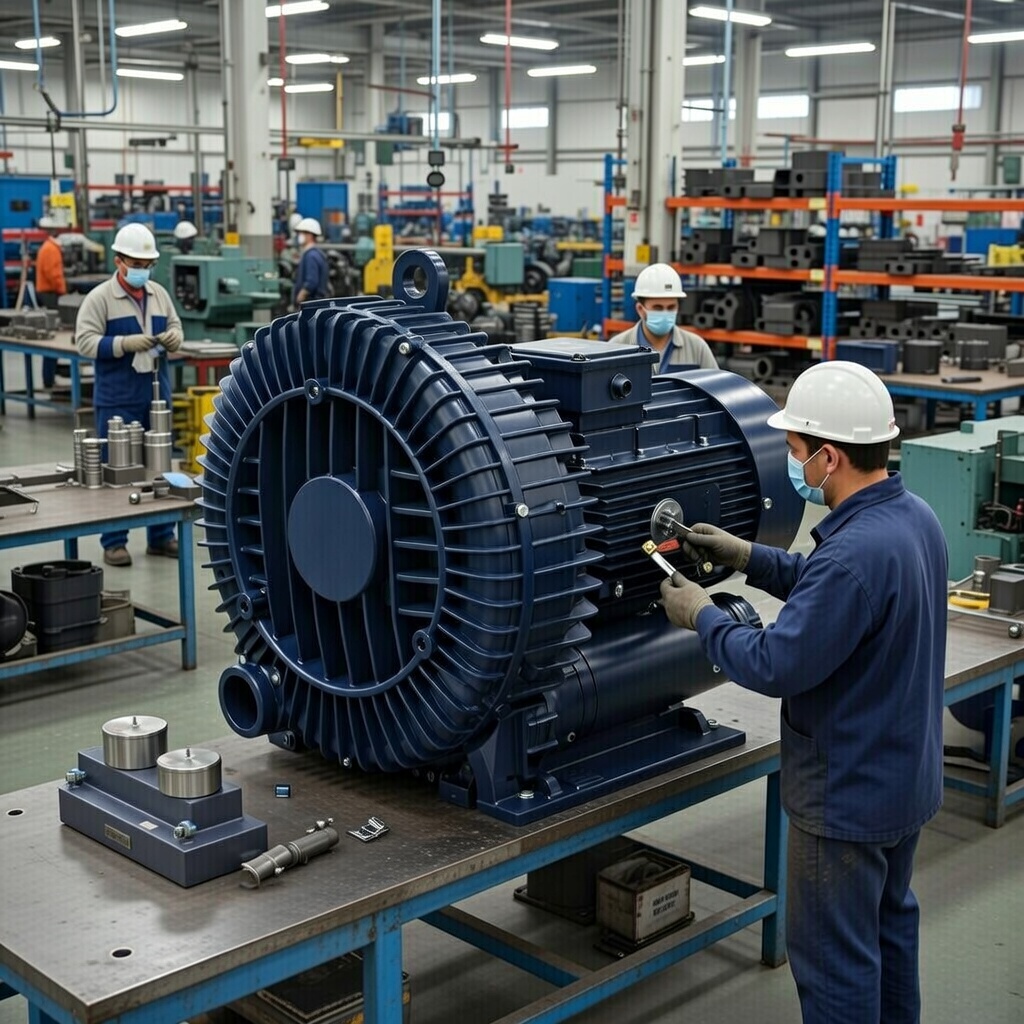
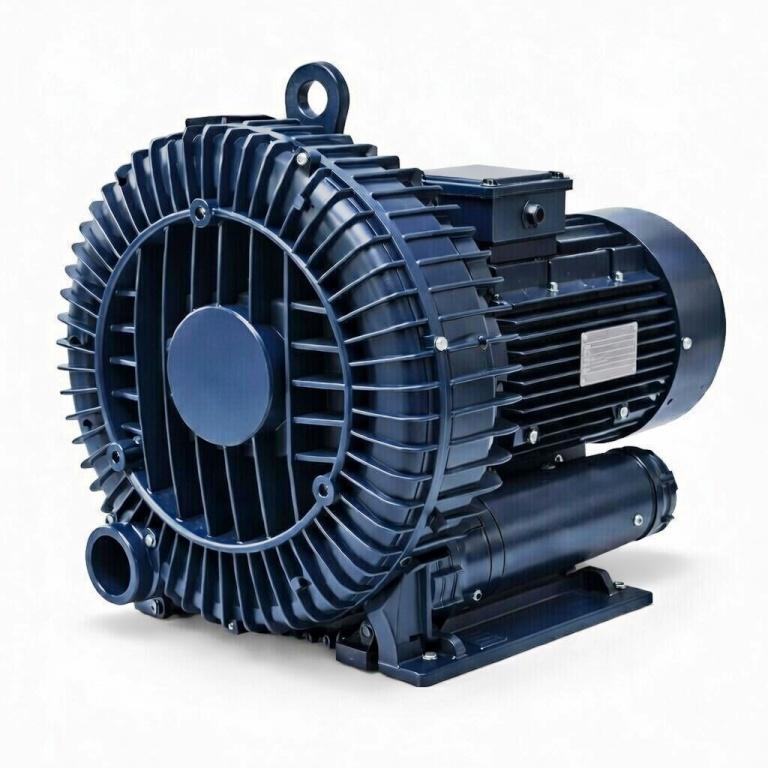
Ring blowers use regenerative air technology. Air moves in a circular (ring-shaped) channel and passes through the impeller multiple times. With every pass, energy is added to the air, creating pressure or vacuum smoothly and continuously.
🔹 What Are Traditional Blowers?
Traditional blowers include:
- Centrifugal blowers
- Roots blowers
- Piston compressors
- Axial fans
They work using direct mechanical compression or single-pass airflow systems.
Working Principle Comparison
Ring Blowers:
- Regenerative airflow
- Multi-pass air movement
- Smooth pressure build-up
- Continuous airflow
- Oil-free operation
Traditional Blowers:
- Direct compression
- Single-pass airflow
- Pulsating pressure
- Mechanical contact
- Often oil-lubricated
Key Differences at a Glance
| Feature | Ring Blowers | Traditional Blowers |
| Technology | Regenerative | Mechanical / Compression |
| Airflow | Smooth & continuous | Pulsating / uneven |
| Noise | Low | High |
| Vibration | Very low | High |
| Maintenance | Low | High |
| Lubrication | Oil-free | Often oil-based |
| Energy efficiency | High | Medium |
| Installation | Easy | Complex |
| Footprint | Compact | Large |
| Automation compatibility | Excellent | Limited |
| Clean air | Yes | Often contaminated |
| Life cycle cost | Low | High |
Performance Comparison
⚡ Energy Efficiency
Ring blowers consume less energy for the same airflow output due to regenerative airflow technology.
Traditional blowers waste more energy through mechanical losses.
Winner: Ring Blowers ✅
🔇 Noise & Vibration
Ring blowers operate quietly with smooth airflow.
Traditional blowers generate high noise and vibration due to mechanical compression.
Winner: Ring Blowers ✅
🛠 Maintenance
Ring blowers:
- No oil system
- Fewer moving parts
- Simple maintenance
Traditional blowers:
- Oil changes
- Gear maintenance
- Frequent servicing
- Higher downtime
Winner: Ring Blowers ✅
🌬 Air Quality
Ring blowers provide 100% oil-free clean air.
Traditional blowers may release oil mist and contaminants.
Winner: Ring Blowers ✅
🧩 Integration in Machines
Ring blowers are compact and easy to integrate into machines.
Traditional blowers require heavy foundations and complex piping.
Winner: Ring Blowers ✅
Industrial Applications Comparison
Ring Blowers are ideal for:
- Packaging machines
- Pneumatic conveying
- Vacuum lifting
- Clean room systems
- Medical equipment
- Wastewater treatment
- Aquaculture
- Bottling plants
- Electronics manufacturing
- Automation systems
Traditional Blowers are used in:
- Heavy pressure systems
- Large air compression systems
- Steel plants
- Heavy mining
- Large industrial furnaces
- High-pressure mechanical systems
Cost Comparison (Life cycle Cost)
Ring Blowers:
- Low purchase cost
- Low maintenance cost
- Low energy cost
- Long service life
- Low downtime
Traditional Blowers:
- High installation cost
- High maintenance cost
- High energy cost
- High downtime risk
- Higher life cycle cost
Safety Comparison
Ring blowers:
✔ Low heat
✔ No oil fire risk
✔ Low vibration
✔ Stable operation
✔ Safer for operators
Traditional blowers:
❌ High heat
❌ Oil fire risk
❌ High vibration
❌ Mechanical hazards
Environmental Impact
Ring blowers support:
- Energy efficiency
- Carbon reduction
- Clean air systems
- ESG goals
- Green manufacturing
- Sustainable production
Traditional blowers have higher carbon footprint.
Future of Industrial Air Systems
Modern industries demand:
- Smart automation
- Clean technology
- Energy efficiency
- Low maintenance
- Compact machines
- Silent operation
- Digital integration
- Sustainable solutions
Ring blowers fit perfectly into this future.
Conclusion
Ring blowers are not just an alternative — they are the evolution of industrial air technology.
Compared to traditional blowers, ring blowers offer:
- Better efficiency
- Lower noise
- Cleaner air
- Lower maintenance
- Compact design
- Easy integration
- Smart compatibility
- Lower life cycle cost
- Safer operation
- Sustainable performance
Traditional blowers still have their place in extremely heavy-duty and ultra-high-pressure systems.
But for modern industrial applications, ring blowers are the smarter, cleaner, and more efficient choice.
In simple words:
Traditional blowers move air.
Ring blowers move industry forward.

Leave A Comment