

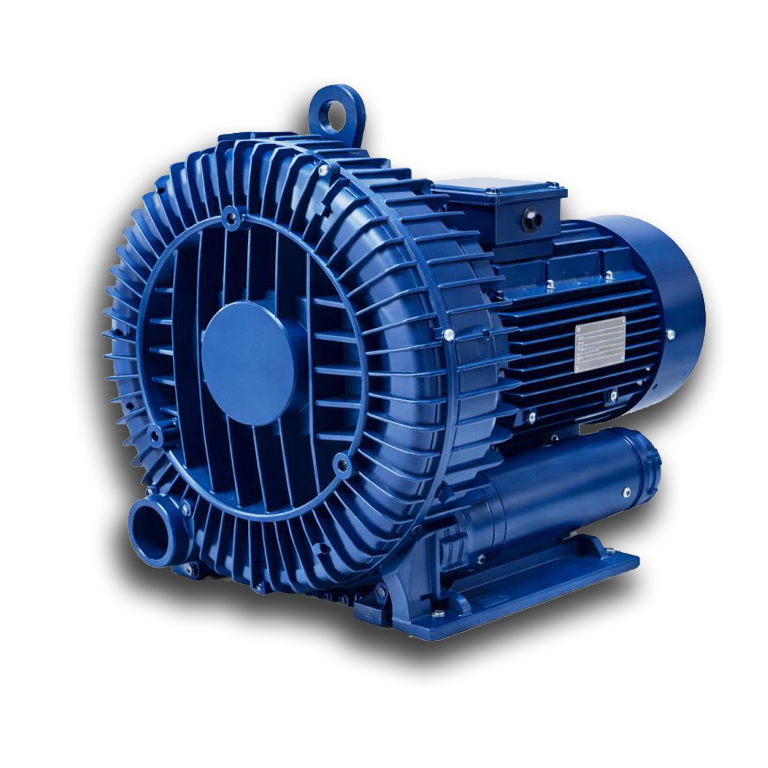
High Pressure vs High Flow Blowers – How to Choose the Right One
Introduction
In industrial airflow system design, one of the most common engineering challenges is choosing between high-pressure blowers and high-flow blowers. Selecting the wrong type can lead to poor system performance, excessive energy consumption, process instability, and long-term operational losses.
This guide provides a clear engineering framework to help industries, engineers, and plant designers choose the right blower type based on application requirements, system design, and performance objectives.
Understanding the Core Difference
High Pressure Blowers
Designed to generate:
- Higher pressure
- Higher vacuum
- Strong resistance-handling capability
Focus: Force and resistance overcoming
High Flow Blowers
Designed to generate:
- Large air volume
- Continuous airflow
- Low resistance operation
Focus: Volume and circulation
Key Performance Parameters
Pressure
- Measured in: mbar, kPa, psi
- Indicates resistance-handling capability
Flow
- Measured in: CFM, m³/hr
- Indicates air volume delivery
Engineering principle: You cannot maximize both simultaneously — design is always a balance.
Applications of High Pressure Blowers
Used where resistance is high:
- Pneumatic conveying
- Material handling systems
- Vacuum lifting systems
- Central vacuum systems
- Packaging vacuum systems
- Filter press systems
- Long duct pipelines
- Dense material transport
Applications of High Flow Blowers
Used where volume is critical:
- HVAC systems
- Ventilation systems
- Cooling systems
- Drying tunnels
- Aeration tanks
- Combustion air supply
- Clean air circulation
- Environmental control systems
Technology Comparison
High Pressure Technologies
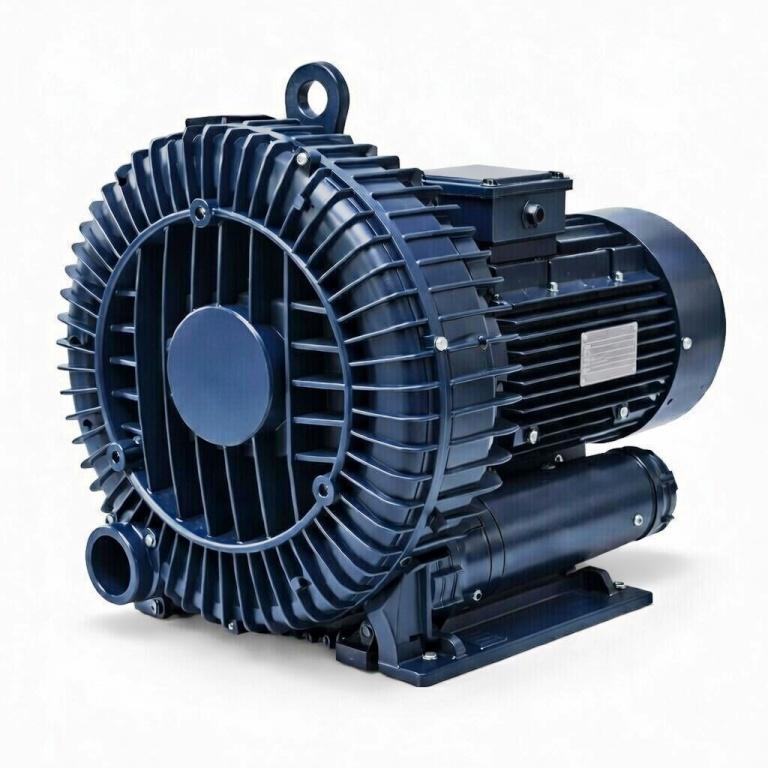
- Side channel (regenerative/Ring) blowers
- Roots blowers
- Multistage centrifugal blowers
High Flow Technologies
- Centrifugal blowers
- Axial flow blowers
- Large-volume ventilation blowers
Engineering Selection Guide
Choose High Pressure Blowers When:
- System resistance is high
- Long pipeline distances exist
- Filtration systems create pressure drop
- Dense material conveying is required
- Vacuum lifting is required
- Precision control is needed
Choose High Flow Blowers When:
- Large volume airflow is required
- Low resistance systems exist
- Open airflow circulation is needed
- Ventilation is primary goal
- Cooling depends on air volume
- Environmental control systems dominate
Energy Efficiency Considerations
Wrong selection leads to:
- Overloading motors
- High power consumption
- Low system efficiency
- Heat generation
- Equipment stress
Correct matching ensures:
- Optimal power usage
- Stable operation
- Long equipment life
- Lower operating costs
Common Engineering Mistakes
- Selecting high flow when pressure is needed
- Selecting high pressure for low resistance systems
- Ignoring system losses
- No airflow modeling
- No future scalability planning
- Poor duct design
Industry 4.0 & Smart Selection
Modern plants use:
- Digital airflow modeling
- CFD simulations
- Smart sensors
- Digital twins
- AI-based performance optimization
ESG & Sustainability Impact
Correct blower selection supports:
- Energy efficiency
- Carbon footprint reduction
- Sustainable manufacturing
- Green factory design
- ESG compliance
Quick Decision Matrix
| Requirement | High Pressure Blower | High Flow Blower |
| Long pipelines | ✔ | ✖ |
| Heavy filtration | ✔ | ✖ |
| Dense material | ✔ | ✖ |
| Ventilation | ✖ | ✔ |
| Cooling | ✖ | ✔ |
| HVAC | ✖ | ✔ |
| Vacuum systems | ✔ | ✖ |
| Aeration | ✖ | ✔ |
Conclusion
Choosing between high-pressure and high-flow blowers is a system engineering decision, not just equipment selection. The right choice depends on process resistance, airflow volume, energy efficiency goals, system design, and future scalability.
By applying engineering analysis instead of assumptions, industries achieve:
- Higher efficiency
- Lower energy costs
- Stable operations
- Reduced downtime
- Longer equipment life
- Sustainable performance
The right blower choice builds future-ready industrial airflow systems.

Leave A Comment