

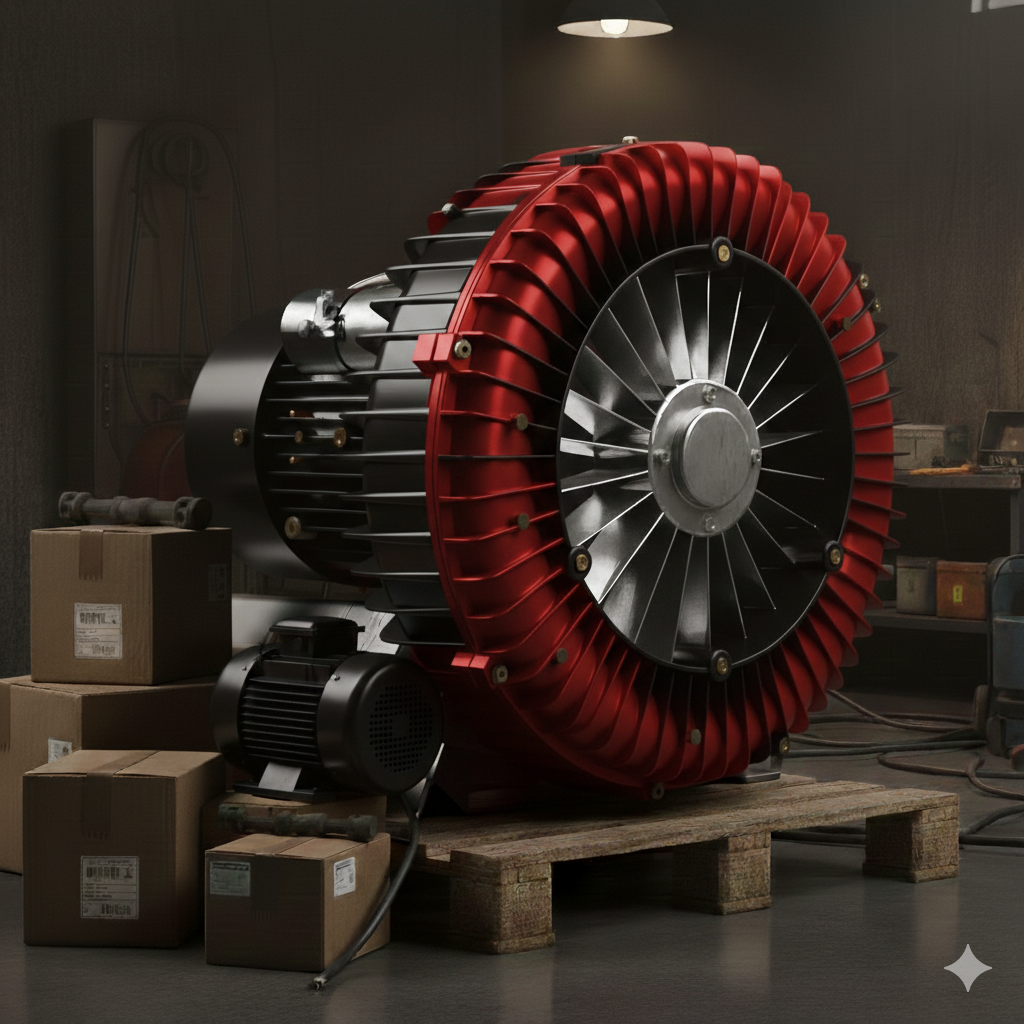
Why Choosing Quality Blowers Matters for Your Manufacturing Process
Introduction
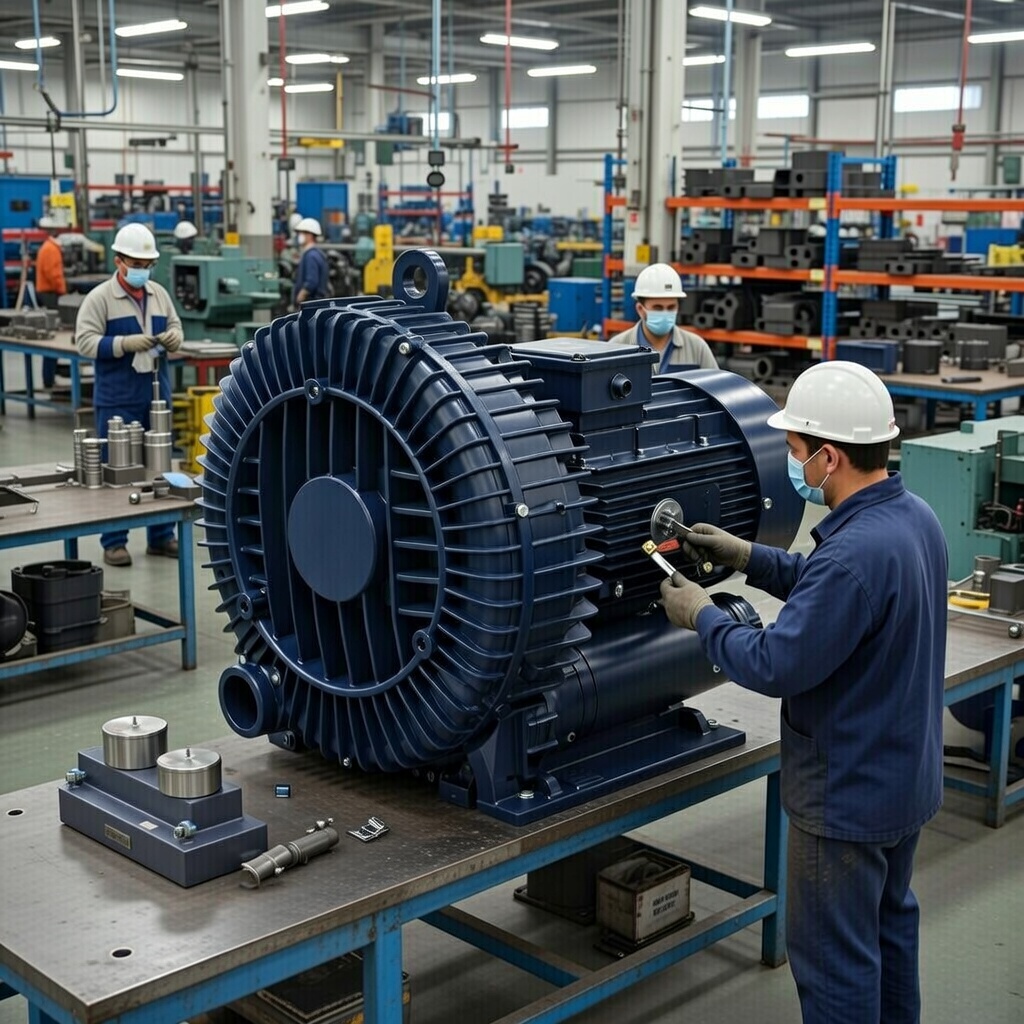
In modern manufacturing, air is not just a utility—it is a critical production resource. From material handling and cooling to aeration, drying, cleaning, and vacuum systems, industrial blowers play a vital role in keeping operations efficient, safe, and productive. Yet, many manufacturers underestimate the impact that blower quality has on overall plant performance.
Choosing a high-quality industrial blower is not simply a capital investment decision—it is a long-term operational strategy. Poor-quality or incorrectly selected blowers can lead to frequent breakdowns, energy waste, production losses, quality defects, and high maintenance costs. On the other hand, quality blowers enhance reliability, efficiency, product consistency, and system stability across the entire manufacturing process.
This article explains why selecting quality blowers is essential and how it directly affects productivity, cost control, sustainability, and business growth.
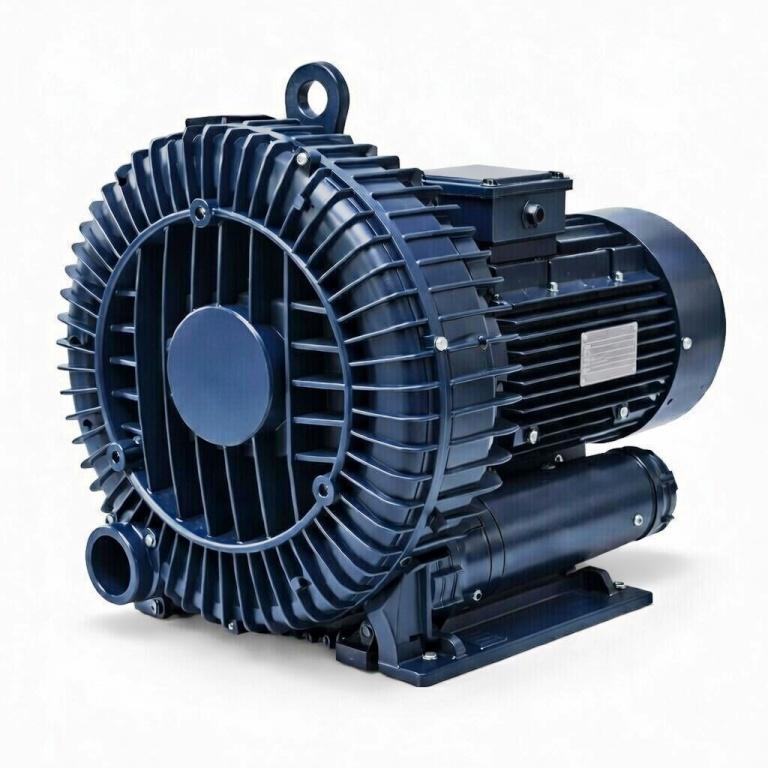
Blowers: The Backbone of Industrial Air Systems
Industrial blowers support critical functions such as:
- Pneumatic conveying of materials
- Process cooling
- Aeration and oxygen supply
- Vacuum lifting and handling
- Dust extraction
- Drying systems
- Combustion air supply
- Filtration systems
If a blower fails, entire production lines can stop. This makes blower systems not just support equipment, but core production infrastructure.
The Hidden Cost of Low-Quality Blowers
1. Frequent Breakdowns
Low-quality components, poor balancing, and inferior bearings result in frequent mechanical failures, leading to unplanned downtime.
2. High Energy Consumption
Inefficient motors and poor airflow design increase power usage and operating costs.
3. Production Losses
Interrupted airflow or vacuum affects automation systems, material flow, and process stability.
4. Inconsistent Product Quality
Fluctuating pressure and airflow can cause defects in drying, coating, packaging, and processing stages.
5. Maintenance Burden
Frequent servicing, part replacements, and repairs increase labor and maintenance expenses.
6. Safety Risks
Equipment failures increase operational hazards for workers and plant infrastructure.
Key Benefits of Choosing Quality Blowers
Reliability and Operational Stability
High-quality blowers are designed for continuous-duty operation, ensuring consistent airflow and pressure levels across production cycles.
Energy Efficiency
Optimised impeller design, high-efficiency motors, and advanced airflow engineering reduce energy consumption significantly.
Reduced Downtime
Fewer breakdowns mean higher up time and improved production continuity.
Long Equipment Life
Robust materials, precision manufacturing, and quality components extend service life.
Process Consistency
Stable air supply improves process control and product quality.
Lower Total Cost of Ownership (TCO)
Although initial cost may be higher, long-term operational savings make quality blowers more economical.
Impact on Manufacturing Productivity
Quality blowers directly influence:
- Production speed
- Automation reliability
- Process cycle time
- Equipment synchronisation
- Operational flexibility
Stable airflow ensures predictable production output, reducing variability and inefficiencies.
Energy Efficiency and Sustainability
Manufacturing industries are under increasing pressure to reduce carbon footprints and energy consumption. Quality blowers contribute to sustainability by:
- Reducing power usage
- Minimising energy losses
- Enabling smart energy management
- Supporting green manufacturing goals
- Lowering emissions
Energy-efficient air systems directly support ESG and sustainability strategies.
Quality Blowers and Smart Manufacturing
In Industry 4.0 environments, blowers are no longer standalone machines. Quality systems integrate with:
- Smart sensors
- IoT monitoring
- Predictive maintenance platforms
- Automated control systems
- Energy management software
This transforms blowers into intelligent production assets rather than basic mechanical equipment.
Industry-Specific Impact
Automotive Manufacturing
Precision airflow ensures paint quality, coating consistency, and automated assembly efficiency.
Food & Beverage
Clean, oil-free air protects hygiene standards and product safety.
Pharmaceuticals
Controlled air supply supports sterile environments and clean room standards.
Textile Industry
Consistent airflow improves fabric handling and drying efficiency.
Electronics Manufacturing
Clean and stable air prevents contamination and static-related defects.
Water & Wastewater Treatment
Reliable aeration ensures biological treatment efficiency.
How to Identify a Quality Blower System
Engineering Design
- Aerodynamic impeller design
- Balanced rotating assemblies
- Precision-machined components
Material Quality
- Corrosion-resistant alloys
- High-grade bearings
- Durable motor insulation
Performance Standards
- Verified airflow and pressure ratings
- Continuous duty certification
Energy Ratings
- High-efficiency motors
- Low power consumption per airflow unit
Safety Features
- Thermal protection
- Overload protection
- Noise control design
Service Support
- Availability of spare parts
- Technical support
- Maintenance accessibility
Strategic Selection Approach
Instead of selecting blowers based only on price, manufacturers should evaluate:
- Life cycle cost
- Energy efficiency
- Reliability metrics
- Maintenance frequency
- Process compatibility
- Scalability
- Integration capability
This ensures long-term operational success rather than short-term cost savings.
Future-Proofing Manufacturing Operations
Quality blowers help future-proof operations by supporting:
- Automation expansion
- Digital transformation
- Energy optimisation
- Smart factories
- Sustainable manufacturing
- Production scalability
They become strategic assets rather than replaceable components.
Conclusion
Choosing quality blowers is not just an equipment decision—it is a business decision that impacts productivity, profitability, sustainability, and competitiveness. High-quality blowers provide stable operations, reduce downtime, lower energy costs, improve product quality, and support long-term manufacturing growth.
In a competitive industrial environment, manufacturers who invest in quality air systems gain operational resilience, process reliability, and long-term cost advantages. The right blower choice transforms air from a basic utility into a strategic manufacturing resource.
This article serves as a strategic guide for manufacturers, engineers, and industrial decision-makers looking to optimise their production systems through reliable and high-performance air solutions.

Leave A Comment