

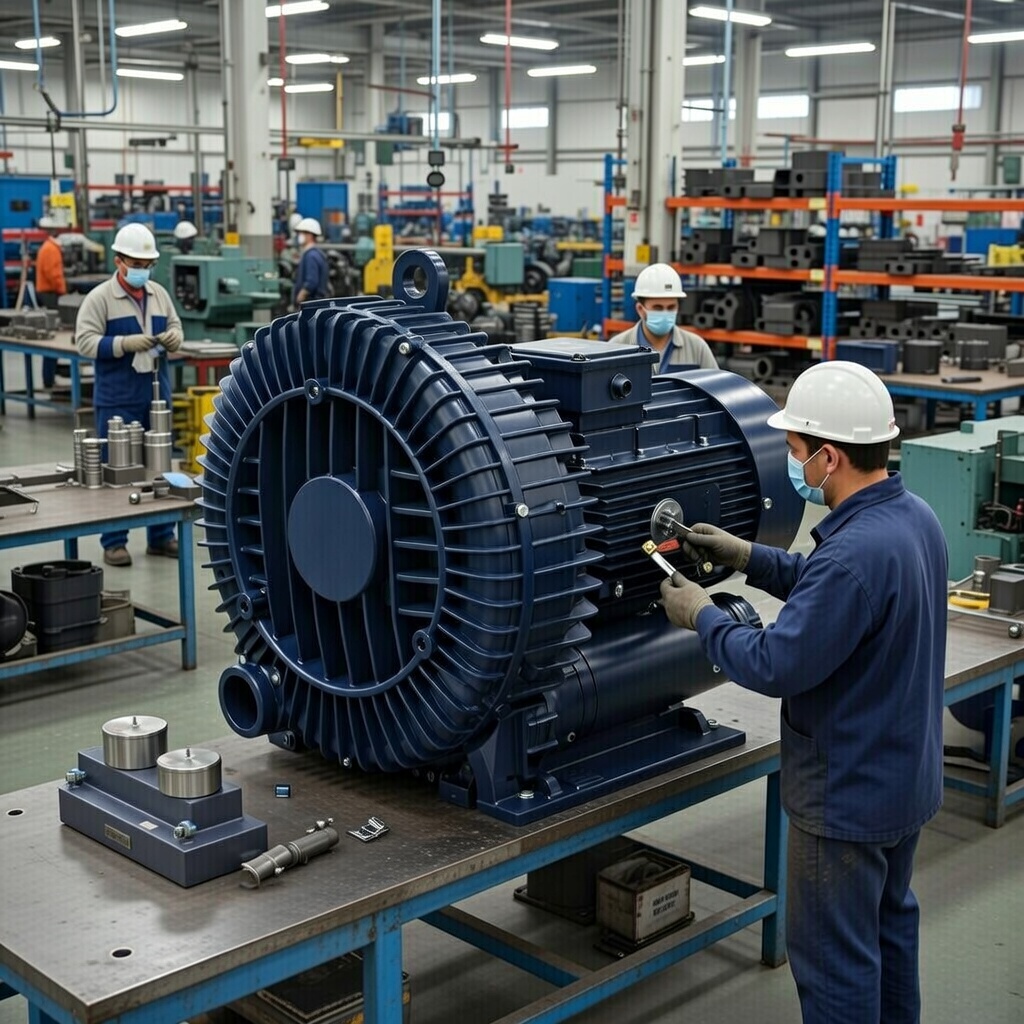
Future-Ready Side Channel Blowers for Smart Factories
Introduction: The Air Technology Powering Industry 4.0
Smart factories are redefining manufacturing through automation, digitisation, and intelligent systems. From AI-driven production lines to IoT-enabled machines, every component must deliver reliability, efficiency, and adaptability. One often-overlooked but mission-critical element in this transformation is the air handling system—especially side channel blowers (also known as ring blowers or regenerative blowers).
Modern smart factories require more than just airflow. They need precision air control, energy efficiency, predictive maintenance, digital integration, and sustainability compliance. This is where future-ready side channel blowers emerge as a core technology—transforming air from a simple utility into a strategic manufacturing asset.
Understanding Side Channel Blower Technology
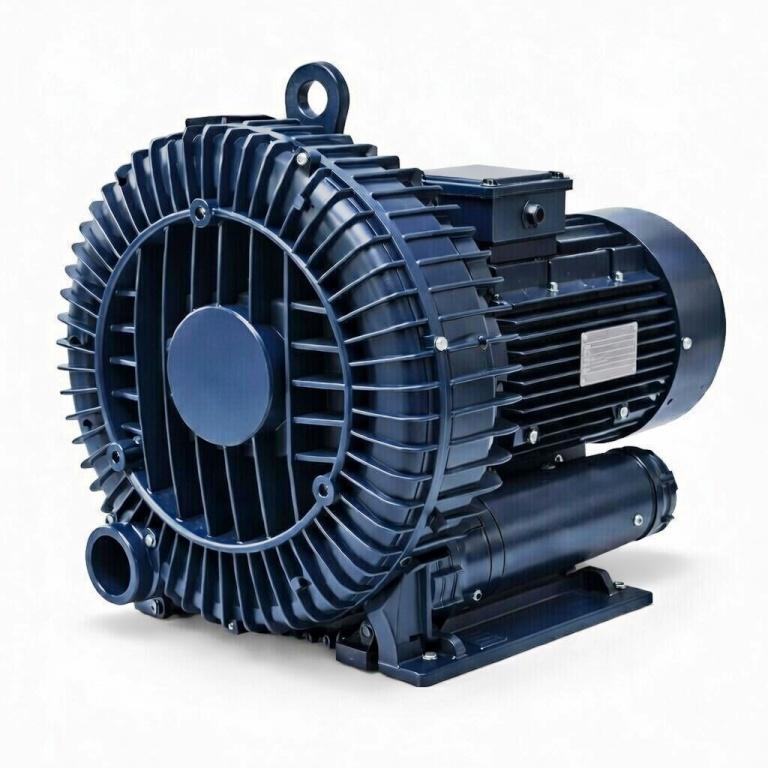
Side channel blowers operate using a non-contact impeller system that accelerates air through a regenerative vortex motion, producing oil-free, pulsation-free airflow. Unlike traditional positive displacement blowers, they deliver:
- Continuous airflow
- Low vibration
- Low noise levels
- Maintenance-free operation
- Clean, contamination-free air
These characteristics make them ideal for automated, sensitive, and digitally controlled environments.
Why Smart Factories Need Future-Ready Air Systems
1. Digital Manufacturing Demands Air Precision
Smart factories rely on sensors, robotics, and automation systems that require stable pressure and flow control. Future-ready side channel blowers provide:
- Consistent pressure curves
- Stable vacuum/pressure output
- Micro-control compatibility with PLCs and VFDs
- Integration with smart controllers
This allows airflow to become a digitally managed resource, not just mechanical supply.
2. Energy Efficiency for Intelligent Operations
Energy optimisation is central to Industry 4.0. Advanced side channel blowers are designed with:
- High-efficiency motors (IE3/IE4/IE5 class)
- Optimised impeller geometry
- Low energy loss airflow paths
- Smart load matching via VFD integration
This reduces:
- Power consumption
- Peak load demand
- Carbon footprint
- Operational costs
Smart factories convert this into real-time energy analytics and performance dashboards.
3. IoT-Enabled Predictive Maintenance
Future-ready blowers are no longer “fit and forget” machines—they are data-generating assets.
With sensor integration:
- Temperature monitoring
- Bearing vibration analysis
- Motor load tracking
- Pressure deviation detection
- Runtime analytics
This enables:
- Predictive maintenance
- Failure forecasting
- Automated service scheduling
- Reduced unplanned downtime
In smart factories, blowers become part of the digital twin ecosystem.
4. Clean Air for Clean Manufacturing
Industries like electronics, batteries, pharmaceuticals, food processing, and semiconductors require contamination-free environments. Side channel blowers provide:
- Oil-free air delivery
- Non-contact compression
- Zero lubricant contamination
- Clean vacuum generation
This makes them essential for:
- Clean rooms
- Dust-free manufacturing
- Hygienic production lines
- Controlled environment facilities
Core Features of Future-Ready Side Channel Blowers
🔹 Smart Integration Capabilities
- PLC/SCADA connectivity
- VFD compatibility
- IoT sensor integration
- Industry 4.0 architecture support
🔹 Sustainable Design
- Low carbon footprint
- Energy-efficient motors
- Long life cycle operation
- Reduced waste generation
🔹 Modular Engineering
- Scalable airflow capacity
- Flexible mounting designs
- Easy system integration
- OEM-friendly customisation
🔹 Noise & Vibration Control
- Acoustic optimised housings
- Vibration-damped structures
- Low decibel operation
- Smart factory compliance
Applications in Smart Factory Ecosystems
Future-ready side channel blowers power multiple smart manufacturing processes:
- Robotics & automation systems
- Conveyor vacuum transport
- Material handling systems
- Pneumatic conveying
- Pick-and-place machines
- Packaging automation
- Battery manufacturing plants
- Electronics assembly lines
- Recycling automation systems
- Smart warehousing & logistics
They function as the invisible infrastructure of digital manufacturing.
AI + Digital Twin Integration
In next-generation factories, side channel blowers are integrated into:
- AI-based energy optimisation models
- Digital twin simulations
- Predictive analytics platforms
- Smart maintenance software
- Autonomous factory management systems
This transforms blowers into intelligent industrial assets rather than mechanical machines.
Role in ESG and Green Manufacturing
Future-ready side channel blowers directly support ESG goals:
Environmental
- Reduced emissions
- Energy-efficient operation
- Oil-free technology
- Lower carbon footprint
Social
- Low noise pollution
- Safer working environments
- Cleaner air systems
Governance
- Compliance-ready design
- Traceable performance data
- Digital compliance reporting
They help factories meet global sustainability and compliance frameworks.
The Future Vision: Air as a Digital Utility
In smart factories, air is evolving into a digitally managed utility, just like electricity and data.
Future systems will feature:
- AI-controlled airflow optimisation
- Autonomous pressure regulation
- Self-diagnosing blower systems
- Smart grid integration
- Energy trading integration
- Carbon tracking dashboards
Side channel blowers will act as core infrastructure nodes in smart industrial ecosystems.
Conclusion: Engineering the Smart Factory Backbone
Future-ready side channel blowers are no longer just machines—they are intelligent infrastructure components. They enable:
- Digital manufacturing
- Smart automation
- Energy optimisation
- Predictive maintenance
- Clean production
- Sustainable operations
- ESG compliance
- Industry 4.0 readiness
In the era of smart factories, the future belongs to intelligent air systems—and side channel blowers are at the center of this transformation.

Leave A Comment