

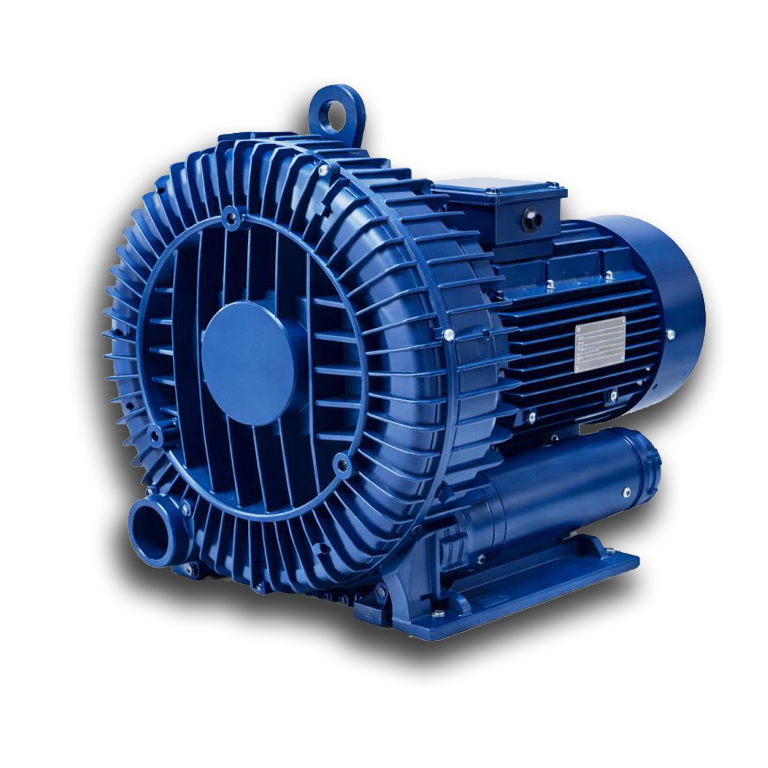
Ring Blower vs Roots Blower: Which One Is Right for Your Application?
When selecting an industrial air blower, two common options often come up: Ring Blowers and Roots Blowers. Both are used to move air, but they work in very different ways and are suited for different applications.
What Is a Ring Blower?
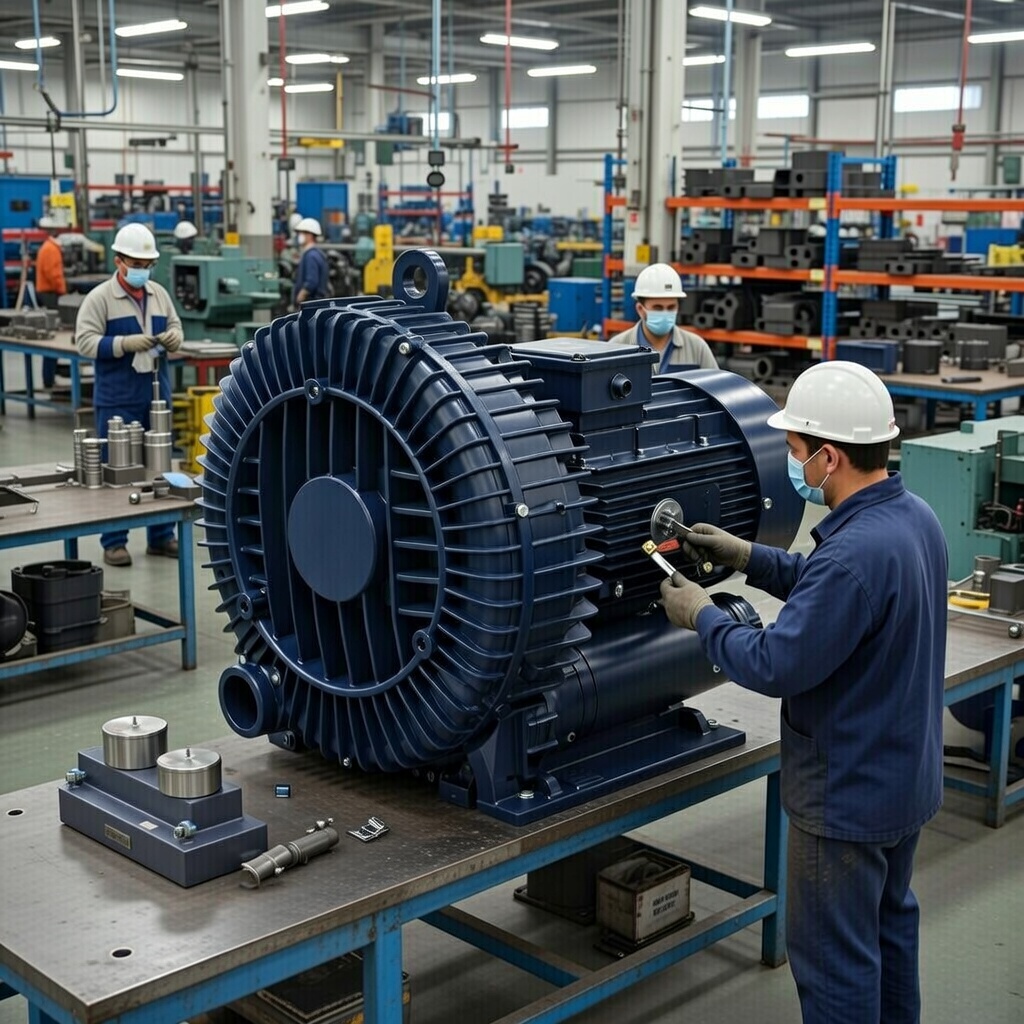
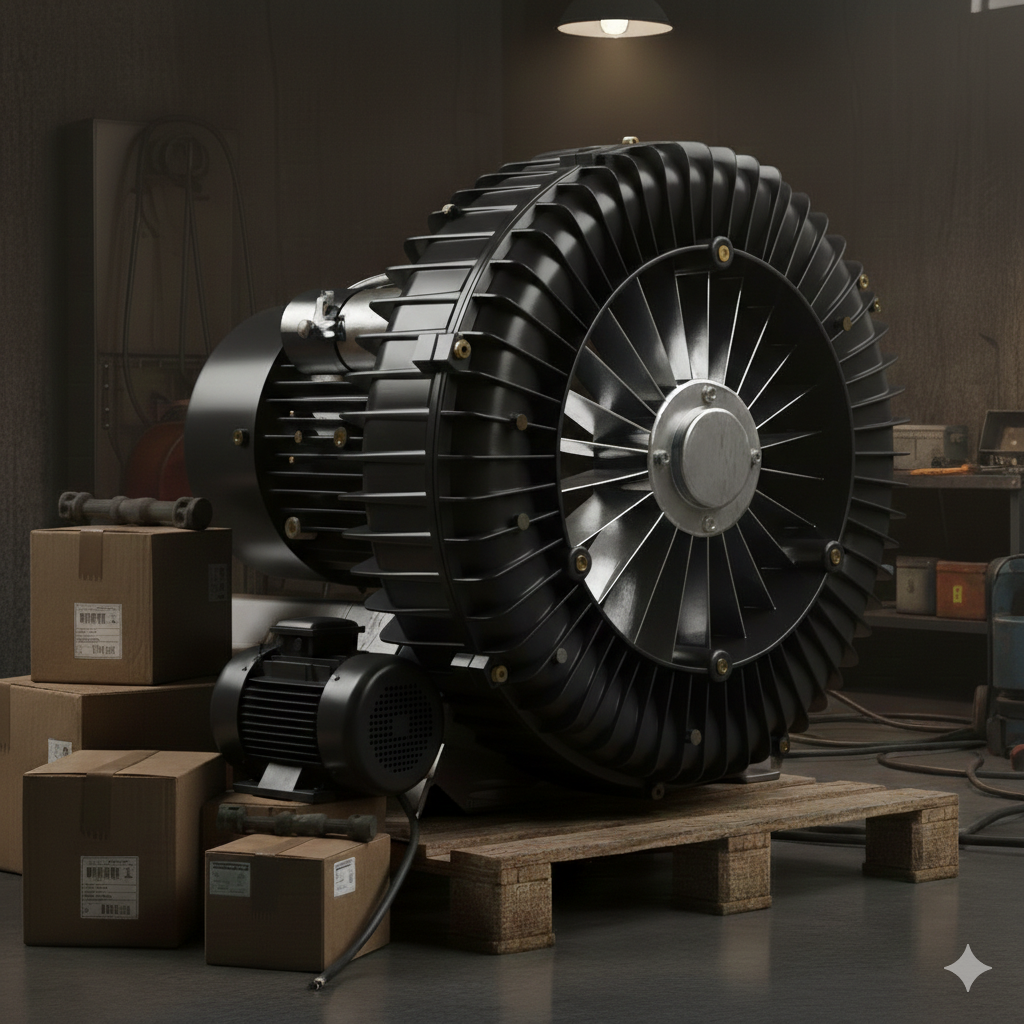
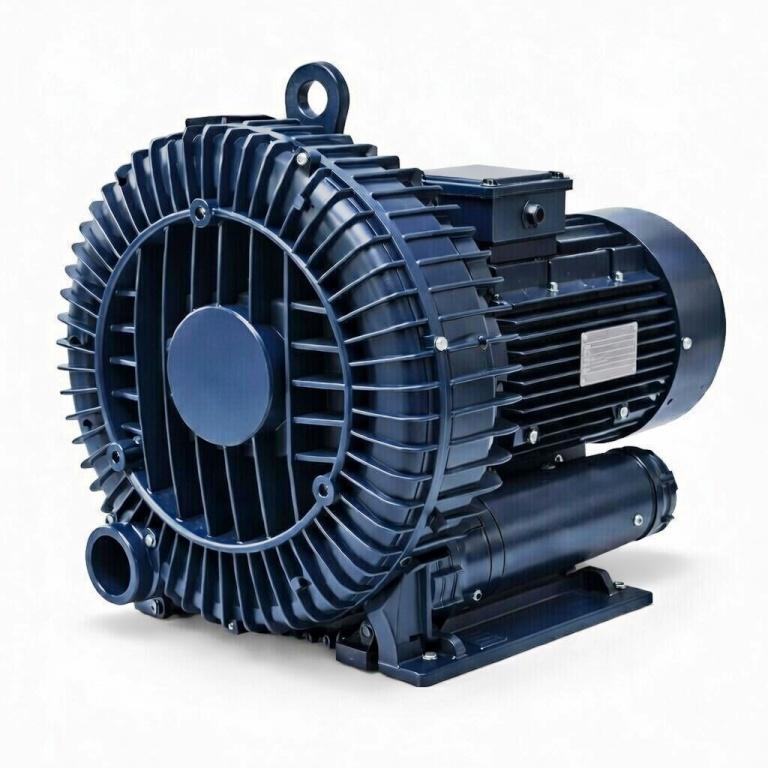
A ring blower, also called a side channel or regenerative blower, produces airflow using a rotating impeller and a ring-shaped side channel. Air moves in a circular path and gains energy gradually.
Key Features of Ring Blowers
- Oil-free operation
- Low maintenance
- Quiet performance
- Suitable for pressure and vacuum
- Compact and lightweight
Ring blowers are ideal for applications that need continuous, clean airflow at low to medium pressure.
What Is a Roots Blower?
A roots blower is a positive displacement blower that uses two rotating lobes to trap and push air from the inlet to the outlet. Air is moved in fixed volumes.
Key Features of Roots Blowers
- High pressure capability
- Strong and robust design
- Suitable for heavy-duty applications
- Higher noise levels
- Requires lubrication
Roots blowers are best for applications that need high pressure or high airflow.
Working Principle Comparison
How a Ring Blower Works
- Air moves in a circular path
- Pressure increases gradually
- No internal compression
- No contact between moving parts
How a Roots Blower Works
- Air is trapped between rotating lobes
- Fixed air volume is pushed forward
- Pressure builds at the outlet
- Internal components rotate in close contact
Ring Blower vs Roots Blower: Key Differences
| Feature | Ring Blower | Roots Blower |
| Working Type | Regenerative | Positive displacement |
| Pressure Range | Low to medium | Medium to high |
| Oil-Free Air | Yes | No |
| Noise Level | Low | High |
| Maintenance | Very low | Moderate to high |
| Continuous Operation | Excellent | Good |
| Size & Weight | Compact | Large & heavy |
| Energy Efficiency | High for low pressure | High for high pressure |
Noise and Vibration
Ring blowers operate smoothly with low vibration and low noise, making them suitable for indoor and noise-sensitive environments.
Roots blowers generate more noise and vibration due to mechanical contact and often require silencers and acoustic enclosures.
Maintenance Comparison
Ring Blower Maintenance
- Filter cleaning
- Occasional bearing checks
- No oil change
Roots Blower Maintenance
- Regular lubrication
- Gear and lobe inspection
- Seal maintenance
Energy Efficiency
Ring blowers are energy-efficient for low to medium pressure applications. They consume less power and are ideal for continuous operation.
Roots blowers are more efficient for high-pressure applications, but energy consumption is higher at lower pressures.
Application Comparison
Applications for Ring Blowers
- Wastewater aeration
- Pneumatic conveying (light materials)
- Packaging and bottling
- Printing machines
- Medical and laboratory equipment
- Vacuum lifting
Applications for Roots Blowers
- Wastewater treatment plants
- Cement and power plants
- Pneumatic conveying (heavy materials)
- Biogas and industrial gas handling
Which One Should You Choose?
Choose a Ring Blower if you need:
- Clean, oil-free air
- Quiet operation
- Low maintenance
- Pressure and vacuum in one machine
- Energy efficiency at low pressure
Choose a Roots Blower if you need:
- High pressure or high airflow
- Heavy-duty industrial use
- Rugged performance in harsh conditions
Cost Consideration
Ring blowers usually have lower initial and maintenance costs, making them cost-effective for many industries.
Roots blowers have a higher upfront cost and maintenance requirement but are necessary for demanding, high-pressure systems.
Conclusion
Both ring blowers and roots blowers are excellent industrial air solutions, but they serve different purposes. Ring blowers are perfect for clean, quiet, and low-maintenance airflow, while roots blowers are designed for high-pressure, heavy-duty applications.
Understanding your airflow, pressure, and operating needs will help you select the right blower for your system.

Leave A Comment