

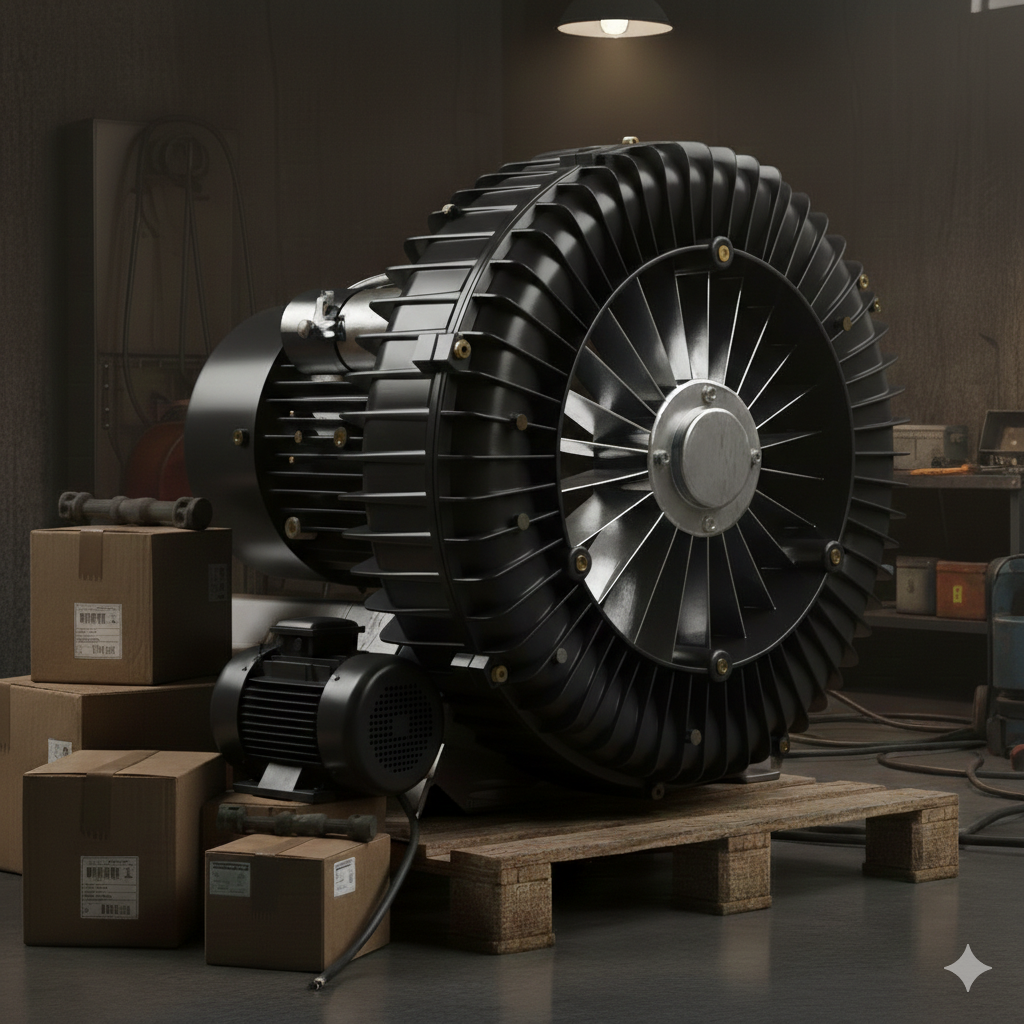
Airflow Dynamics in Ring Blower Systems
Airflow is the heart of every industrial air system — and in ring blowers, airflow dynamics define performance, efficiency, reliability, and system stability. Understanding how air moves, accelerates, compresses, and circulates inside a ring blower helps industries design better systems, reduce energy costs, and achieve higher operational efficiency.
Ring blowers (also known as side channel blowers or regenerative blowers) are not simple air-moving machines. They are engineered airflow systems that use regenerative air movement to create stable pressure and vacuum for industrial applications.
This blog explains airflow dynamics in ring blower systems in a simple, practical, and industrial-focused way.
What Is Airflow Dynamics?
Airflow dynamics is the science of how air:
- Enters a system
- Moves through channels
- Gains velocity
- Builds pressure
- Circulates repeatedly
- Exits with controlled force
In ring blowers, airflow dynamics is not linear — it is regenerative and circular, which makes their working principle unique compared to traditional blowers.
How Air Moves Inside a Ring Blower
A ring blower works on the regenerative principle.
Step-by-Step Airflow Process:
- Air enters through the inlet port
- It enters the side channel (ring channel)
- The impeller blades rotate at high speed
- Air is captured between impeller blades
- Centrifugal force pushes air outward
- Air circulates in a circular path
- Each rotation adds more energy
- Air pressure increases gradually
- Airflow becomes compressed
- Pressurised air exits through the outlet
This repeated energy addition is why it is called regenerative airflow.
Regenerative Airflow Explained Simply
Unlike compressors that compress air directly, ring blowers:
- Accelerate air repeatedly
- Add energy in multiple cycles
- Build pressure gradually
- Maintain stable flow
- Avoid sudden compression shocks
This creates:
✔ Smooth airflow
✔ Stable pressure
✔ Continuous output
✔ Low vibration
✔ Low noise
✔ Long machine life
Circular Airflow Path Design
The ring-shaped side channel is not just a shape — it is an engineering design feature.
Why circular airflow matters:
- Maintains continuous energy transfer
- Prevents turbulence
- Reduces pressure loss
- Improves efficiency
- Creates stable flow
- Reduces mechanical stress
- Enhances performance consistency
Role of the Impeller in Airflow Dynamics
The impeller is the core airflow controller.
Functions of the impeller:
- Captures air
- Accelerates air
- Guides airflow
- Controls direction
- Maintains circulation
- Transfers kinetic energy
Impeller design affects:
- Air volume
- Pressure generation
- Energy efficiency
- Noise level
- Temperature rise
- System stability
High-quality impeller design = better airflow performance.
Pressure Build-Up Mechanism
Pressure in a ring blower is created by energy accumulation, not compression.
Each rotation:
- Adds velocity
- Increases kinetic energy
- Builds pressure
- Stabilises airflow
This gradual pressure build-up ensures:
- No pressure spikes
- No airflow shocks
- No sudden load
- Smooth system operation
- Long component life
Vacuum Generation Dynamics
Ring blowers also create vacuum using the same principle.
Vacuum airflow process:
- Air is continuously removed from the suction side
- Pressure difference is created
- Air moves toward low-pressure zone
- Continuous suction is maintained
- Stable vacuum flow is achieved
This allows use in:
- Vacuum lifting
- Pneumatic conveying
- Central vacuum systems
- Packaging
- Dust extraction
Single-Stage vs Double-Stage Airflow Dynamics
Single-Stage Ring Blower:
- One circulation path
- Moderate pressure
- High airflow
- Energy efficient
- Lower temperature rise
Double-Stage Ring Blower:
- Two circulation paths
- Higher pressure
- Higher vacuum
- Stronger force
- More power output
Airflow dynamics change based on stage design.
Factors That Influence Airflow Performance
Internal Factors:
- Impeller design
- Channel geometry
- Blade shape
- Clearance tolerances
- Motor speed
- Internal friction
External Factors:
- Pipe length
- Pipe diameter
- Bends and fittings
- Filters
- Valves
- System resistance
- Environmental temperature
Good airflow design requires system-level engineering, not just blower selection.
Airflow Stability and Process Reliability
Stable airflow means:
- Stable production
- Consistent quality
- Predictable output
- Controlled processes
- Reliable automation
- Safe operations
Ring blowers provide constant airflow, making them ideal for continuous industrial operations.
Energy Efficiency and Airflow Dynamics
Efficient airflow = less energy loss.
Optimised airflow dynamics lead to:
- Lower power consumption
- Reduced heat generation
- Less mechanical stress
- Lower vibration
- Higher efficiency
- Longer service life
This directly reduces operational costs.
Airflow Control in Industrial Systems
Modern ring blower systems use:
- Flow control valves
- Pressure sensors
- VFD drives
- Smart controllers
- Automation systems
- IoT monitoring
This allows:
- Dynamic airflow adjustment
- Load-based control
- Energy optimisation
- Process automation
- Predictive maintenance
Smart Factories and Airflow Intelligence
In Industry 4.0 environments, airflow becomes data:
- Airflow monitoring
- Performance analytics
- Energy dashboards
- Predictive maintenance
- Fault detection
- Remote diagnostics
Air is no longer just air — it becomes digital industrial data.
Why Airflow Dynamics Matter for Industry
Understanding airflow dynamics helps industries:
- Choose the right blower
- Design better systems
- Reduce energy waste
- Prevent breakdowns
- Improve efficiency
- Increase productivity
- Extend equipment life
- Optimise operations
Applications Where Airflow Dynamics Are Critical
- Pneumatic conveying
- Clean room systems
- Packaging lines
- Vacuum lifting
- Wastewater aeration
- Dust extraction
- Industrial drying
- Material handling
- Central vacuum systems
- Automated production lines
Engineering Benefits of Optimised Airflow
✔ Better system efficiency
✔ Lower power bills
✔ Reduced noise
✔ Improved reliability
✔ Longer machine life
✔ Stable operations
✔ Reduced downtime
✔ Clean production
✔ Process consistency
✔ Automation readiness
Conclusion
Airflow dynamics in ring blower systems define how efficiently, reliably, and sustainably an industrial process operates.
Ring blowers are not just machines — they are engineered airflow systems that use regenerative air movement to create stable pressure and vacuum.
By understanding airflow dynamics, industries can design:
- Smarter systems
- Cleaner processes
- Energy-efficient operations
- Reliable production lines
- Sustainable factories
In modern manufacturing, airflow is not just support —
Airflow is infrastructure.
And ring blowers are the engines that power it.

Leave A Comment