

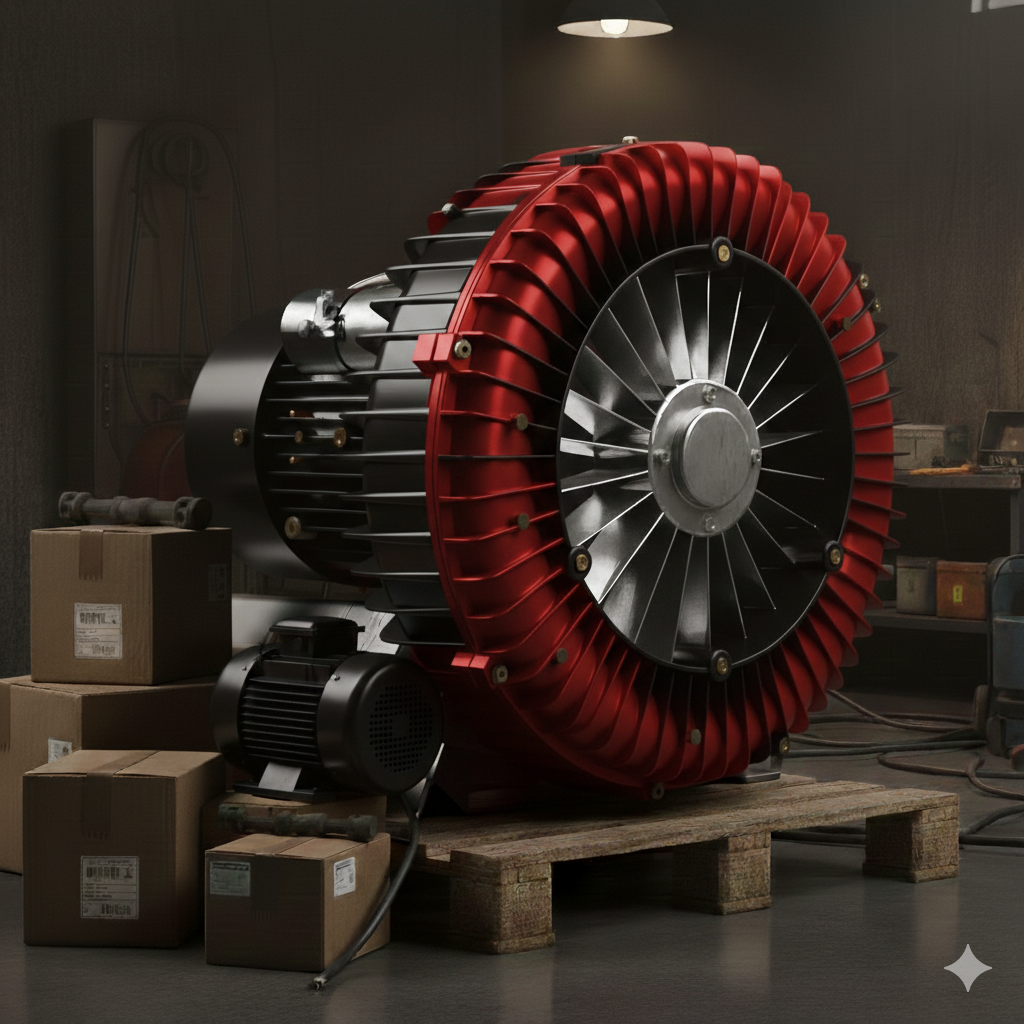
Understanding Regenerative Air Technology in Industrial Blowers
In modern industries, air is more than just a resource — it is a critical utility. From material handling and vacuum systems to clean manufacturing and wastewater treatment, industrial processes depend on reliable, clean, and efficient air systems. One of the most advanced and reliable air technologies used today is regenerative air technology.
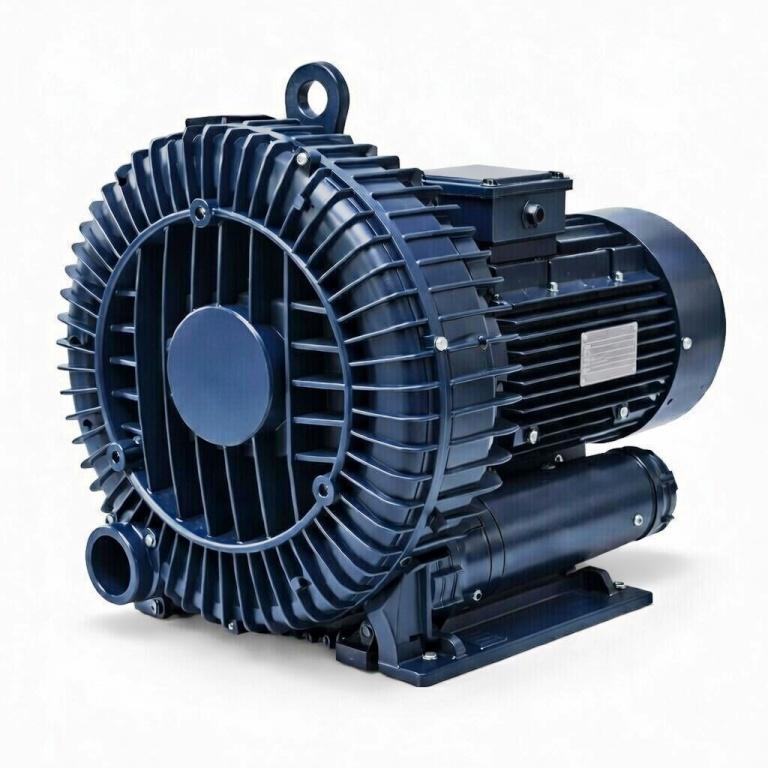
Regenerative air technology is the working principle behind ring blowers (also called side channel blowers or regenerative blowers). This technology offers oil-free operation, stable airflow, continuous performance, and high reliability — making it ideal for a wide range of industrial applications.
This blog explains regenerative air technology in a simple, practical, and industry-focused way.
What Is Regenerative Air Technology?
Regenerative air technology is a method of generating pressure and vacuum by repeatedly accelerating air inside a specially designed circular channel.
Instead of compressing air directly (like compressors), regenerative systems:
- Accelerate air multiple times
- Circulate air in a loop
- Add energy gradually
- Build pressure step-by-step
- Maintain continuous airflow
This repeated energy addition process is called regeneration — hence the name regenerative air technology.
How Regenerative Air Technology Works
Step-by-Step Process:
- Air enters through the inlet port
- Air moves into the side channel
- A high-speed impeller rotates
- Air gets trapped between impeller blades
- Centrifugal force pushes air outward
- Air circulates around the channel
- Each rotation adds energy
- Air velocity increases
- Pressure builds gradually
- Pressurised air exits through the outlet
This process creates smooth, stable, and continuous airflow.
Why It’s Called “Regenerative”
The word regenerative means energy reuse.
In regenerative systems:
- Air is not used once
- It is circulated multiple times
- Energy is added in every cycle
- Pressure builds progressively
- Efficiency increases naturally
This makes the system more stable and efficient than single-pass air systems.
Key Components in Regenerative Air Systems
🔹 Impeller
Controls air acceleration and circulation.
🔹 Side Channel (Ring Channel)
Guides circular airflow movement.
🔹 Inlet & Outlet Ports
Manage air entry and exit.
🔹 Motor System
Provides rotational energy.
🔹 Housing Structure
Maintains airflow geometry.
Each part plays a role in airflow regeneration.
Regenerative Air vs Traditional Air Systems
| Feature | Regenerative Air | Traditional Blowers |
| Air Compression | No direct compression | Direct compression |
| Airflow | Regenerative circulation | Linear flow |
| Pressure Build-up | Gradual | Instant |
| Vibration | Low | Higher |
| Noise | Low | Higher |
| Maintenance | Low | Higher |
| Air Quality | Oil-free | Often oil-lubricated |
| Efficiency | High | Moderate |
| Duty Cycle | Continuous | Limited |
Pressure and Vacuum Generation
Regenerative air technology creates:
🔵 Pressure (Blowing Mode)
For:
- Pneumatic conveying
- Air drying
- Cooling systems
- Material transport
- Filtration
🟢 Vacuum (Suction Mode)
For:
- Vacuum lifting
- Packaging
- Dust extraction
- Central vacuum systems
- Sheet handling
Same technology, two functions.
Single-Stage vs Double-Stage Regeneration
Single-Stage Systems:
- One regeneration cycle
- Moderate pressure
- High airflow
- Energy efficient
Double-Stage Systems:
- Two regeneration cycles
- Higher pressure
- Higher vacuum
- Stronger force
- Heavy-duty use
Advantages of Regenerative Air Technology
✔ Oil-free operation
✔ Clean air delivery
✔ Continuous duty performance
✔ Stable airflow
✔ Low vibration
✔ Low noise
✔ Long service life
✔ Energy efficiency
✔ Low maintenance
✔ Compact design
✔ High reliability
Industrial Applications
Regenerative air technology is used in:
- Pneumatic conveying
- Wastewater aeration
- Packaging systems
- Food processing
- Pharmaceutical manufacturing
- Electronics production
- Dust extraction
- Vacuum lifting
- Printing industry
- Cement plants
- Bottling lines
- Textile manufacturing
Role in Clean Manufacturing
Because regenerative systems are oil-free, they are ideal for:
- Clean rooms
- Pharma plants
- Food processing
- Medical manufacturing
- Electronics production
They prevent contamination and maintain product quality.
Energy Efficiency Benefits
Regenerative systems:
- Reduce energy loss
- Optimise airflow paths
- Minimize heat generation
- Reduce mechanical friction
- Improve power usage efficiency
This lowers operational costs.
Smart Factory Integration
Modern regenerative systems support:
- IoT monitoring
- Smart sensors
- Predictive maintenance
- Energy analytics
- Automation control
- Digital dashboards
- Remote diagnostics
Making them ready for Industry 4.0 environments.
Sustainability & ESG Impact
Regenerative air technology supports:
- Clean production
- Low emissions
- Energy savings
- Oil-free operation
- Long product life
- Sustainable manufacturing
- Environmental compliance
- Green factory design
Business Benefits
Industries using regenerative air systems gain:
📈 Higher productivity
📉 Lower energy bills
🛠 Reduced maintenance
🔁 Reliable operations
⚙ Stable production
🌱 Sustainable growth
🏭 Long-term ROI
📊 Process efficiency
🔒 Operational safety
Why Regenerative Air Technology Is the Future
Because industries need:
- Clean air
- Reliable systems
- Energy efficiency
- Low maintenance
- Automation compatibility
- Sustainability
- Smart integration
- Continuous performance
Regenerative air technology meets all these needs.
Conclusion
Understanding regenerative air technology in industrial blowers helps industries move toward smarter, cleaner, and more efficient production systems.
Ring blowers powered by regenerative air technology are not just machines —
They are engineered airflow solutions that support:
- Industrial automation
- Clean manufacturing
- Energy efficiency
- Sustainable operations
- Smart factories
- Reliable production
In the future of industry, regenerative air technology will not be an option —
It will be the standard.

Leave A Comment