

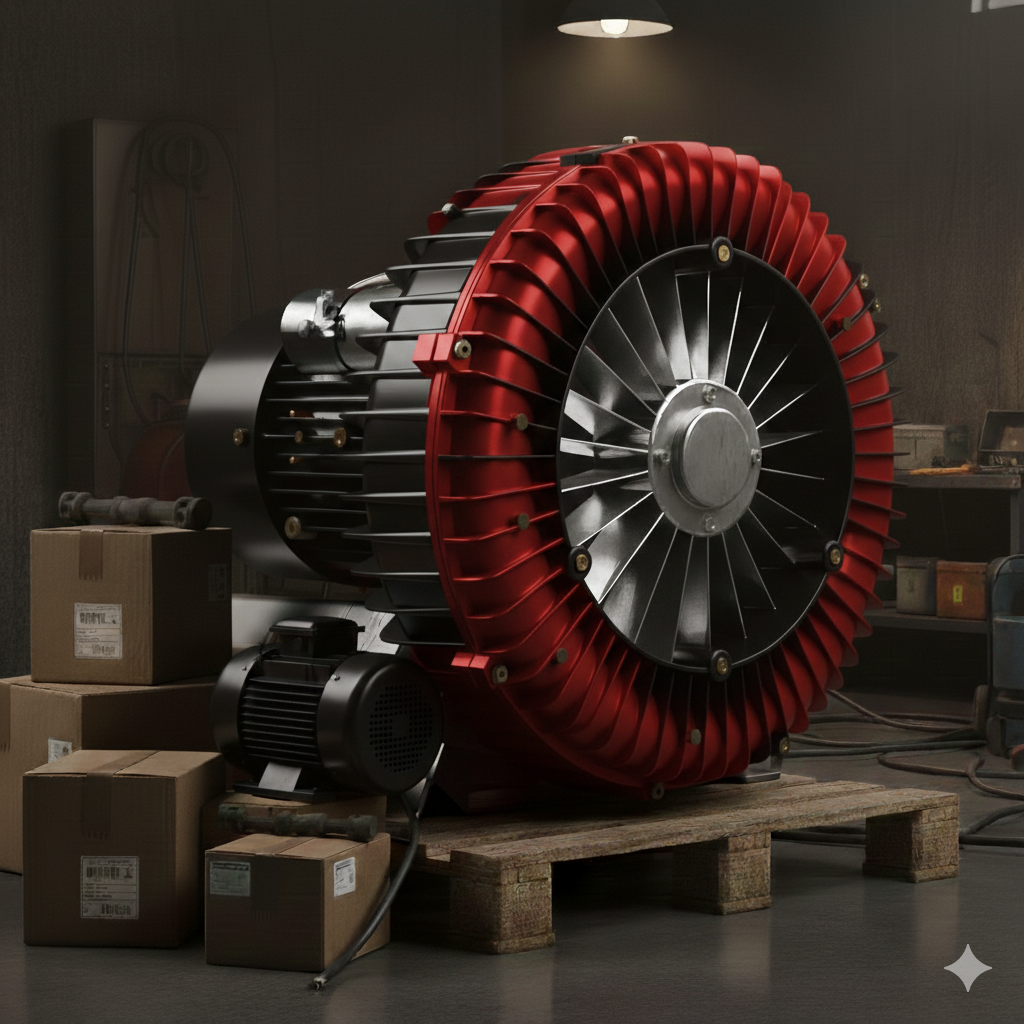
Cooling Systems Used in Industrial Ring Blowers
Industrial ring blowers operate continuously under high-speed conditions, handling pressure, vacuum, airflow resistance, and heavy-duty loads. All these factors generate heat. Without proper cooling, this heat can reduce efficiency, damage components, and shorten equipment life.
That’s why cooling systems are a critical part of ring blower design. They protect the machine, maintain performance stability, and ensure long-term reliability.
This blog explains the cooling systems used in industrial ring blowers in a simple, practical, and industry-focused way.
Why Cooling Is Necessary in Ring Blowers
Heat is generated due to:
- High-speed motor operation
- Air friction inside channels
- Regenerative airflow cycles
- Electrical losses
- Mechanical friction
- System load resistance
- Continuous duty cycles
- Pressure and vacuum loads
Without cooling, heat builds up and causes failures.
Types of Cooling Systems in Ring Blowers
🌬 Air Cooling Systems (Primary Cooling Method)
Self-Cooling Airflow
The air moving through the blower absorbs heat and carries it away.
External Ventilation
Air flows over the housing and motor body to remove heat.
Motor Cooling Fans
Fans push air across hot components.
Housing Vent Channels
Designed to improve airflow circulation.
Advantages:
- Simple
- Reliable
- Low maintenance
- Energy efficient
- Cost-effective
🔄 Forced Air Cooling
Used in high-speed and heavy-duty systems.
Features:
- High-flow cooling fans
- Directed airflow paths
- Enhanced ventilation
- Controlled cooling channels
🌡 Thermal Conduction Cooling
Heat moves from hot components to cooler surfaces.
Methods:
- Heat-conductive housing materials
- Heat transfer plates
- Thermal bridges
- Structural heat paths
🌍 Natural Convection Cooling
Heat dissipates naturally into surrounding air.
Depends on:
- Surface area
- Ambient temperature
- Installation layout
- Ventilation space
Motor Cooling Systems
Motors have dedicated cooling:
- Internal cooling fans
- External ventilation ducts
- Thermal insulation
- Temperature sensors
- Overheat protection systems
- Thermal cutoffs
Motor cooling is critical for safety.
Impeller Cooling Design
Impeller design supports cooling by:
- Reducing turbulence
- Minimising friction
- Controlling air temperature
- Optimising airflow paths
- Preventing heat concentration
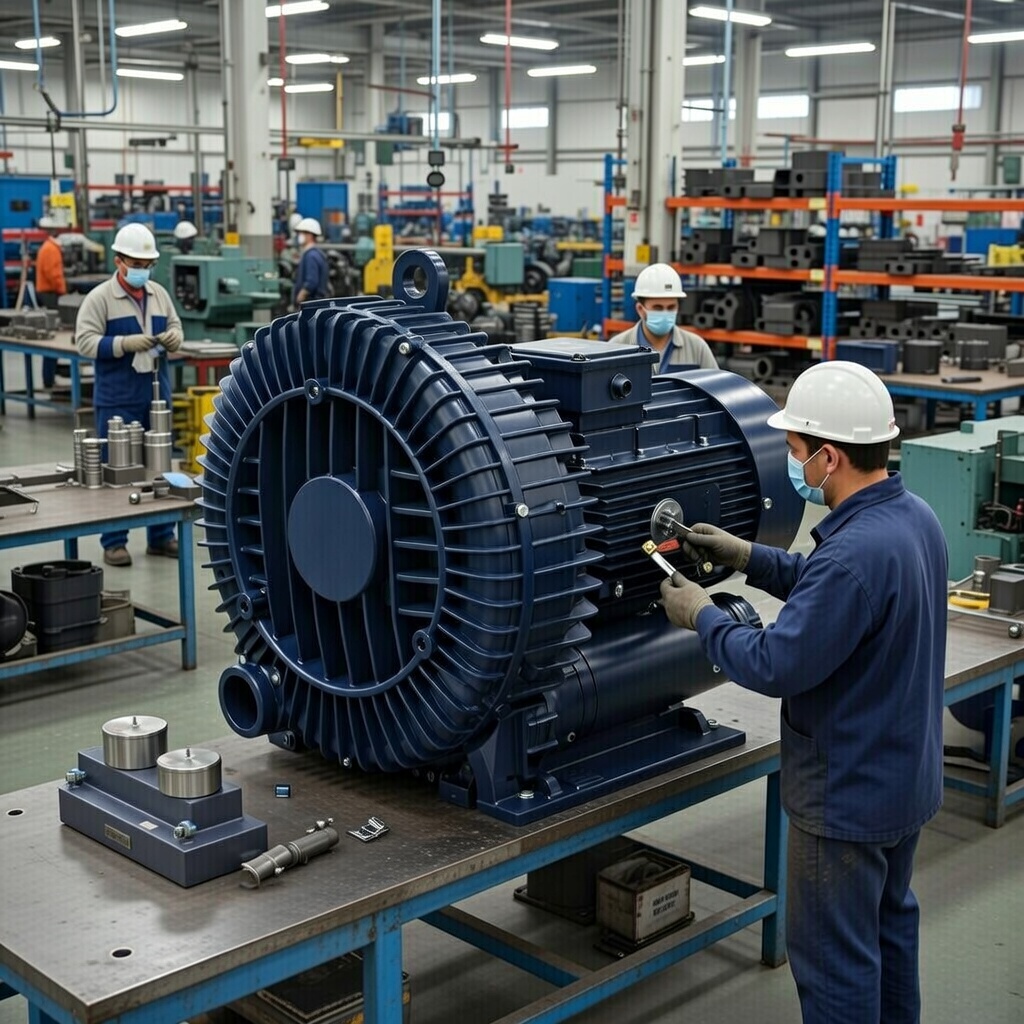
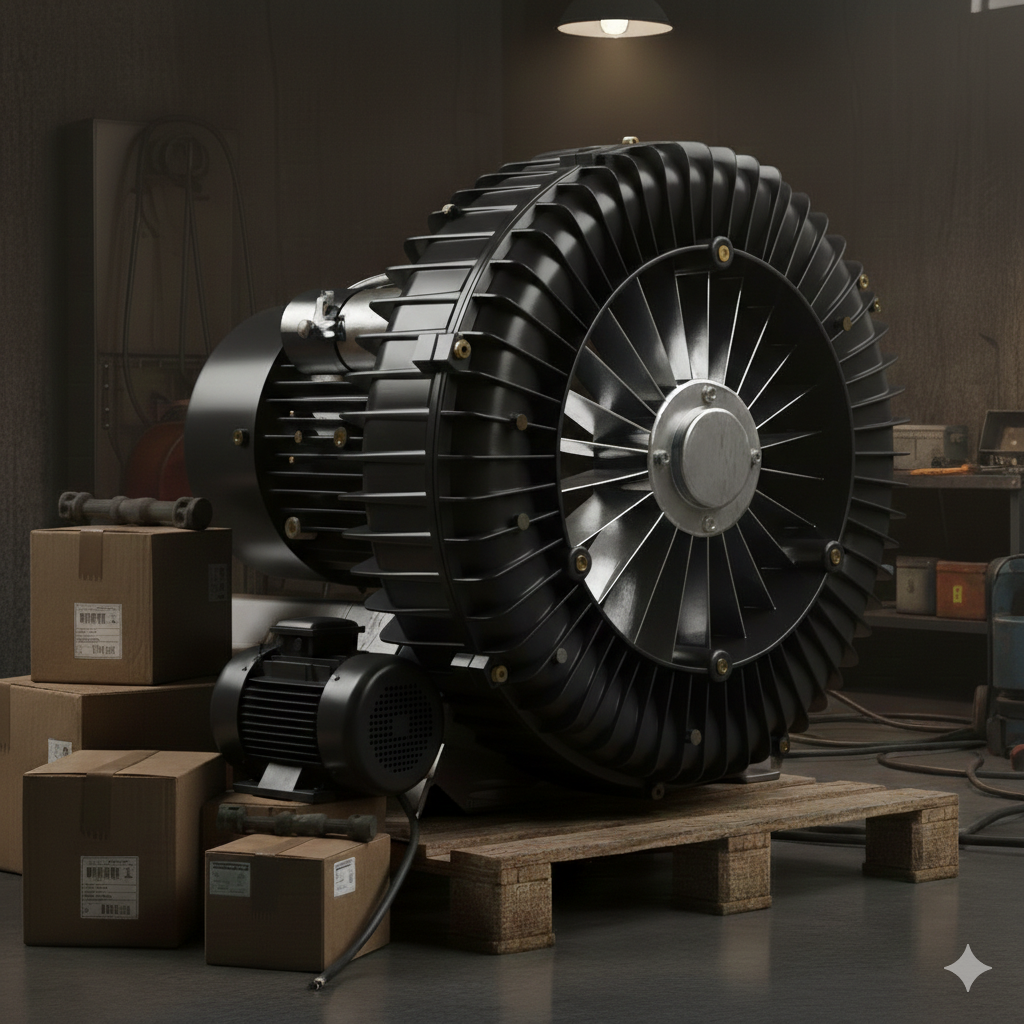
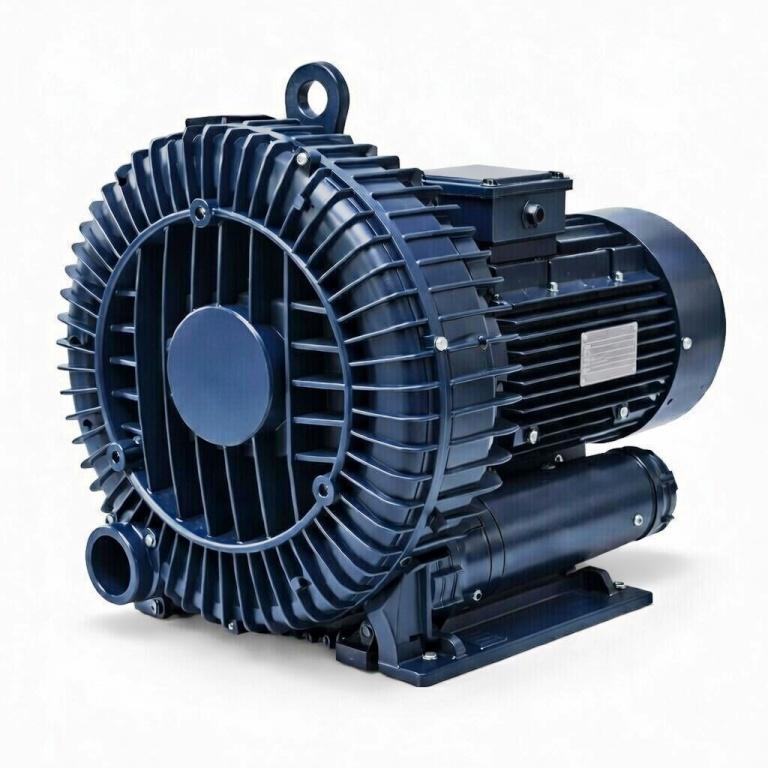
Housing Design for Cooling
Blower housings are designed to:
- Dissipate heat efficiently
- Increase surface area
- Support airflow circulation
- Prevent heat trapping
- Improve thermal radiation
System-Level Cooling Management
Cooling depends on installation:
- Proper ventilation space
- Free airflow around blower
- Good plant airflow
- Ambient temperature control
- Exhaust heat removal
- Avoid closed enclosures
- Correct mounting orientation
Poor installation = overheating risk.
Cooling in Pressure vs Vacuum Operation
Pressure Mode:
- Higher outlet air temperature
- Pressure load heat
- Compression-related heat
Vacuum Mode:
- Motor load heating
- Suction friction heating
- Continuous airflow heating
Both modes require proper cooling.
Smart Cooling Systems
Modern ring blowers include:
- Temperature sensors
- Smart controllers
- Automatic cooling control
- Thermal alarms
- Load-based cooling
- IoT monitoring
- Predictive maintenance
This creates intelligent thermal protection.
Benefits of Efficient Cooling
✔ Stable performance
✔ Long equipment life
✔ Energy efficiency
✔ Lower maintenance
✔ Operational safety
✔ Continuous duty capability
✔ Reduced downtime
✔ Lower operating costs
✔ System reliability
✔ Process stability
Industries Where Cooling Is Critical
- Continuous manufacturing
- Pneumatic conveying
- Wastewater treatment
- Food processing
- Packaging plants
- Electronics manufacturing
- Cement plants
- Textile industry
- Printing plants
- Automated factories
Future Cooling Technologies
Future systems will use:
- Smart thermal materials
- Adaptive cooling systems
- AI-based thermal control
- Predictive cooling
- Intelligent ventilation
- Heat recovery systems
- Energy recycling cooling
- Advanced thermal modeling
Conclusion
Cooling systems used in industrial ring blowers are essential for performance, reliability, and long service life.
Cooling is not just about removing heat — it is about:
- Protecting components
- Maintaining efficiency
- Ensuring safety
- Supporting continuous operation
- Enabling sustainable production
With proper cooling design, ring blowers deliver:
- Stable performance
- Long life
- Low maintenance
- Energy efficiency
- Operational reliability
In modern industry, cooling is not support —
Cooling is protection, performance, and productivity.

Leave A Comment