

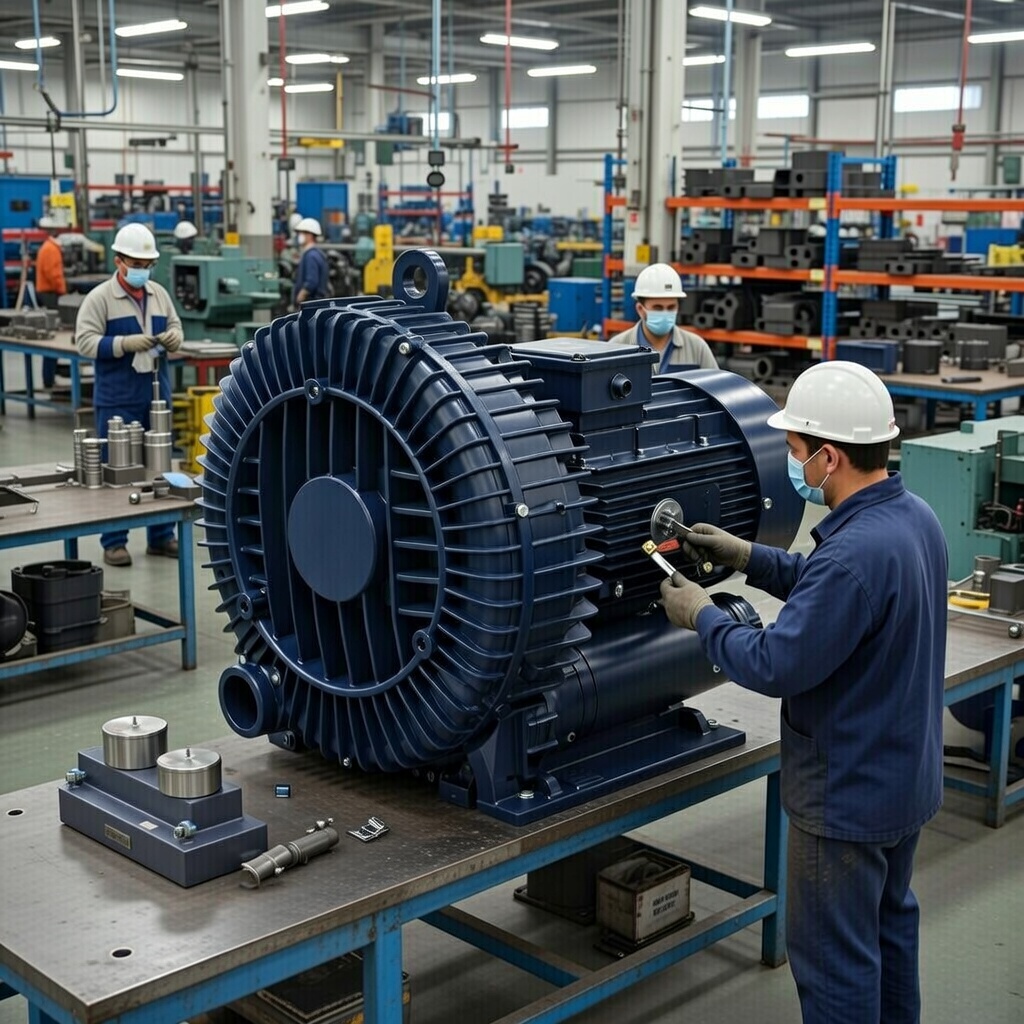
Complete Ring Blower Knowledge Hub
The Ultimate Guide to Ring (Side Channel / Regenerative) Blowers
Introduction
Ring blowers, also known as side channel blowers, regenerative blowers, or vortex blowers, are essential air-moving devices used across a wide range of industries. From wastewater treatment plants and aquaculture farms to packaging lines and medical equipment, ring blowers play a critical role in maintaining efficient airflow, pressure, and vacuum systems. Their oil-free operation, low noise, compact design, and long service life make them one of the most reliable air-handling technologies in modern industry.
This Complete Ring Blower Knowledge Hub is designed as a comprehensive resource that explains what ring blowers are, how they work, their types, applications, advantages, selection criteria, maintenance practices, and future trends. Whether you are an engineer, plant manager, business owner, or technical buyer, this guide will help you understand ring blowers in-depth and choose the right solution for your industrial needs.
What is a Ring Blower?
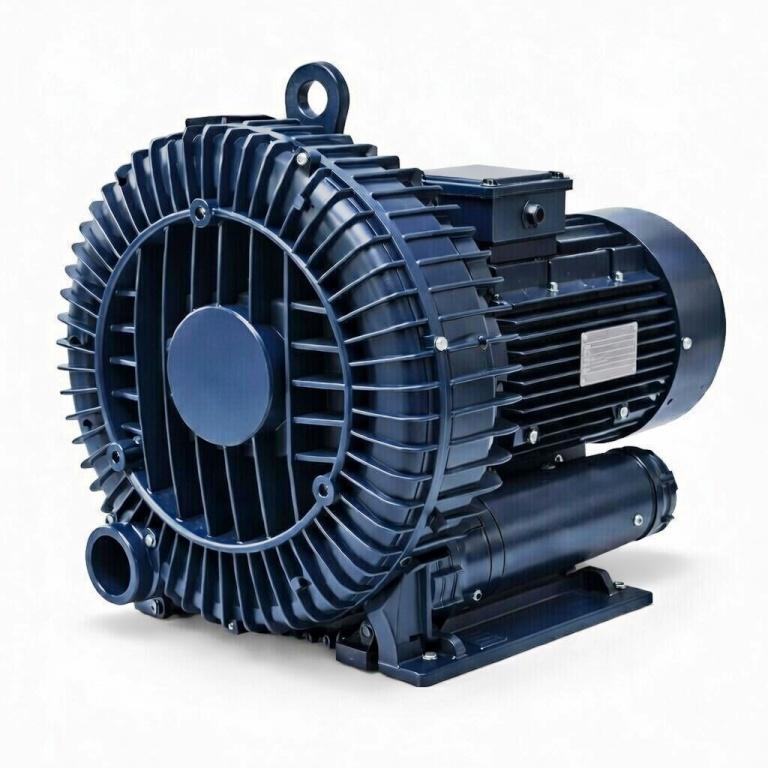
A ring blower is a non-positive displacement air blower that generates airflow using a high-speed rotating impeller inside a ring-shaped channel. Unlike traditional compressors or roots blowers, ring blowers do not compress air mechanically between chambers. Instead, they use regenerative airflow technology, where air is accelerated multiple times in a circular path, gradually increasing pressure or vacuum.
Because of this operating principle, ring blowers are ideal for applications requiring continuous airflow at low to medium pressure or vacuum, with smooth, pulsation-free performance.
How a Ring Blower Works
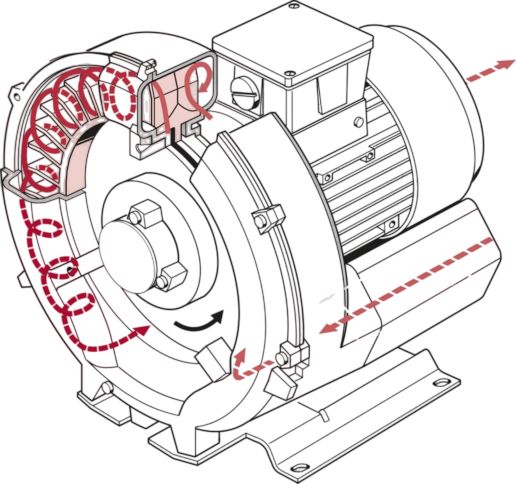
The working principle of a ring blower is simple yet highly efficient:
- Air Intake: Air enters through the inlet port.
- Impeller Rotation: A high-speed impeller rotates inside the side channel (ring-shaped housing).
- Regenerative Acceleration: Air is repeatedly accelerated around the circular channel.
- Pressure/Vacuum Generation: With each rotation, energy is transferred to the air, increasing pressure (for blowing) or vacuum (for suction).
- Air Discharge: The air exits through the outlet port at the required pressure or vacuum level.
This regenerative process is why ring blowers are also called regenerative blowers.
Types of Ring Blowers
1. Single-Stage Ring Blowers
- One impeller and one air channel
- Suitable for low pressure and vacuum applications
- Energy efficient and compact
2. Double-Stage Ring Blowers
- Two impellers or dual air channels
- Higher pressure and vacuum capacity
- Used for more demanding industrial processes
3. Single Phase Ring Blowers
- Used in small commercial and domestic applications
- Lower power consumption
4. Three Phase Ring Blowers
- Industrial-grade systems
- Higher efficiency, durability, and performance
Key Features of Ring Blowers
- Oil-Free Operation – Clean air without contamination
- Low Noise Levels – Quiet operation compared to traditional blowers
- Low Vibration – Smooth, balanced performance
- Compact Design – Space-saving installation
- Continuous Duty Operation – Suitable for 24/7 usage
- Minimal Maintenance – Fewer moving parts
- Energy Efficient – Lower power consumption
- Long Service Life – Durable construction
Major Applications of Ring Blowers
Industrial Applications
- Pneumatic conveying systems
- Dust extraction systems
- Packaging and filling machines
- Printing and paper industries
- Plastic processing and molding
- CNC machine vacuum systems
Environmental Applications
- Wastewater treatment plants
- Effluent treatment plants (ETP)
- Sewage treatment plants (STP)
- Aeration systems
Aquaculture & Fisheries
- Fish pond aeration
- Oxygen supply systems
- Hatchery operations
Medical & Laboratory
- Medical suction systems
- Vacuum therapy equipment
- Laboratory air handling
Food & Beverage Industry
- Packaging vacuum systems
- Food drying processes
- Bottle drying
- Material handling
Advantages of Ring Blowers
- Clean Air Supply: Oil-free design ensures contamination-free air
- Energy Savings: Lower power usage compared to compressors
- Low Operating Cost: Reduced maintenance and servicing
- Reliable Performance: Stable airflow without pulsation
- Quiet Operation: Ideal for indoor installations
- Versatile Usage: Suitable for pressure and vacuum applications
- Long-Term Durability: Industrial-grade materials ensure long life
Ring Blower vs Other Blowers
Ring Blower vs Roots Blower
- Ring blowers: Low pressure, continuous flow, quiet operation
- Roots blowers: High pressure, heavy-duty, noisy operation
Ring Blower vs Centrifugal Blower
- Ring blowers: Compact, stable flow, low maintenance
- Centrifugal blowers: High airflow, large size, higher noise
Ring Blower vs Air Compressor
- Ring blowers: Low pressure, continuous air
- Compressors: High pressure, intermittent use
How to Select the Right Ring Blower
1. Airflow Requirement (CFM / m³/hr)
Calculate the exact airflow needed for your application.
2. Pressure / Vacuum Level
Determine required pressure (mbar) or vacuum (mmHg).
3. Application Type
Pressure application or vacuum application.
4. Duty Cycle
Continuous or intermittent operation.
5. Power Supply
Single phase or three phase.
6. Installation Environment
Indoor, outdoor, dust, humidity, temperature.
7. Noise Requirements
Silent operation for hospitals, labs, and offices.
Installation Best Practices
- Install on a flat, vibration-free surface
- Ensure proper ventilation
- Use proper inlet and outlet filters
- Avoid air leakage in pipelines
- Maintain correct electrical connections
- Use silencers for noise reduction
Maintenance Guidelines
- Clean air filters regularly
- Check bearings and lubrication
- Inspect electrical connections
- Ensure proper airflow
- Monitor noise and vibration
- Schedule periodic servicing
Common Problems and Solutions
| Problem | Cause | Solution |
| Low pressure | Air leakage | Seal pipelines |
| Overheating | Poor ventilation | Improve airflow |
| Noise | Bearing wear | Replace bearings |
| Vibration | Misalignment | Realign installation |
Safety Guidelines
- Avoid blocking air inlet/outlet
- Do not operate without filters
- Follow electrical safety standards
- Use thermal protection devices
- Regular inspections
Future Trends in Ring Blower Technology
- Smart IoT-enabled monitoring
- Energy-efficient motors
- Noise reduction technologies
- Lightweight composite materials
- AI-based predictive maintenance
- Green energy integration
Conclusion
Ring blowers are one of the most reliable, efficient, and versatile air-handling solutions for modern industries. Their oil-free operation, low noise, minimal maintenance, and continuous-duty performance make them ideal for applications ranging from wastewater treatment and aquaculture to packaging, healthcare, and manufacturing.
As industries move towards energy efficiency, sustainability, and automation, ring blower technology continues to evolve with smart monitoring systems, advanced materials, and eco-friendly designs. Investing in the right ring blower not only improves operational efficiency but also reduces long-term operational costs and enhances system reliability.
This Complete Ring Blower Knowledge Hub serves as a comprehensive reference guide for engineers, buyers, and industry professionals seeking deep knowledge and practical insights into regenerative blower technology. By understanding their working principles, applications, advantages, and selection criteria, businesses can make informed decisions and maximise the performance of their air-handling systems.

Leave A Comment