

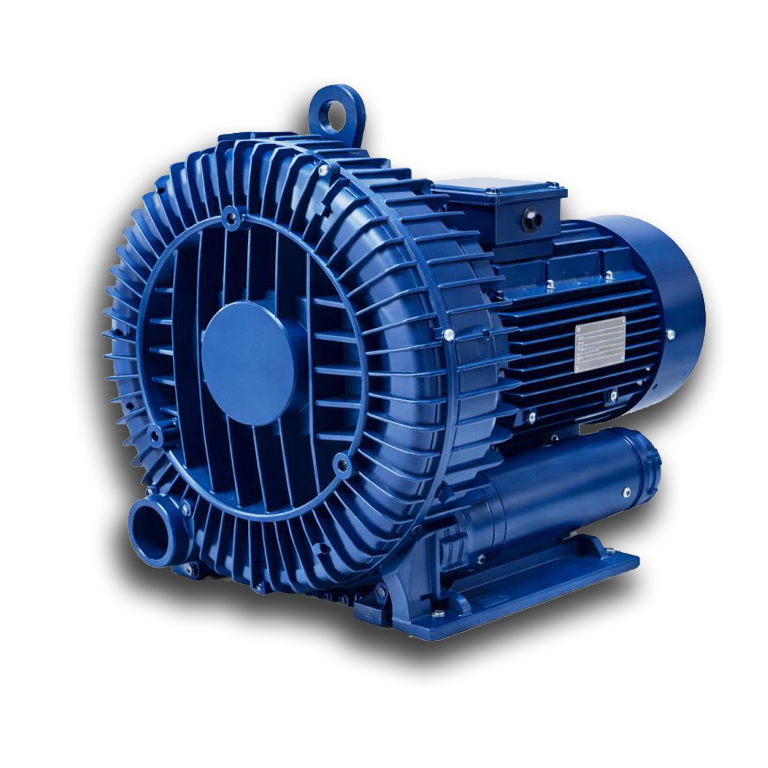
Impeller Technology in Ring Blowers
In ring blowers (also called side channel blowers or regenerative blowers), the impeller is the heart of the entire system. It is the main rotating component that moves air, builds pressure, and creates vacuum. Without advanced impeller technology, a ring blower cannot deliver efficient performance, stable airflow, or long service life.
This blog explains in simple language what impeller technology is, how it works, and why it is so important in modern ring blowers.
What Is an Impeller in a Ring Blower?
An impeller is a specially designed rotating wheel with multiple small blades or vanes. It spins at high speed inside the blower housing and moves air through centrifugal force and regenerative airflow motion.
In ring blowers:
- The impeller rotates inside a circular (ring-shaped) channel
- Air enters the blower
- The impeller pushes the air forward
- Air moves around the ring path multiple times
- Energy is added repeatedly to the air
- Pressure or vacuum is created
This process is called regenerative air movement.
How Impeller Technology Works in Ring Blowers
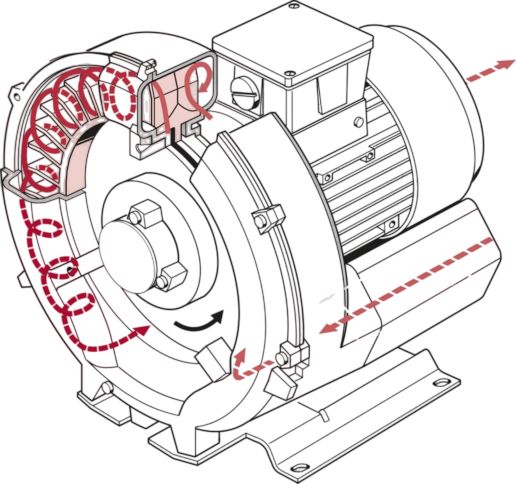
RingBlowers
Step-by-Step Process:
- Air enters the blower inlet
- The impeller starts rotating at high speed
- Air is pulled into the impeller blades
- Centrifugal force pushes air outward
- Air flows around the ring channel
- Air re-enters the impeller multiple times
- Energy is added again and again
- Pressure or vacuum builds continuously
- Air exits through the outlet port
This repeated energy transfer makes ring blowers highly efficient and stable.
Design Features of Ring Blower Impellers
1. Precision Blade Geometry
Modern impellers use:
- Aerodynamic blade profiles
- Smooth curved vanes
- Optimized air angles
- Balanced airflow channels
This improves:
- Efficiency
- Airflow stability
- Pressure generation
- Energy savings
2. High-Speed Balanced Construction
Impellers are:
- Dynamically balanced
- Precision-machined
- Vibration-controlled
- High-RPM capable
This ensures:
- Smooth operation
- Low noise
- Long bearing life
- Low mechanical stress
3. Lightweight & Strong Materials
Common materials:
- Aluminum alloys
- Special industrial polymers
- Stainless steel (special applications)
Benefits:
- Low inertia
- Fast acceleration
- Energy efficiency
- Corrosion resistance
- Long service life
4. Multi-Vane Blade Design
Multiple vanes allow:
- Continuous airflow
- Smooth pressure buildup
- Stable vacuum creation
- Low pulsation
- Uniform air distribution
Types of Impeller Designs in Ring Blowers
🔹 Single-Stage Impeller
- One impeller
- Moderate pressure/vacuum
- High airflow
- Energy efficient
- Compact design
🔹 Double-Stage Impeller
- Two impellers in series
- Higher pressure
- Stronger vacuum
- Heavy-duty performance
- Industrial-grade output
Role of Impeller in Performance
The impeller controls:
| Function | Impact |
| Airflow volume | System capacity |
| Pressure level | Performance power |
| Vacuum strength | Suction efficiency |
| Energy consumption | Operating cost |
| Noise level | Workplace comfort |
| Heat generation | Thermal stability |
| System reliability | Machine life |
| Maintenance needs | Service cost |
Advantages of Advanced Impeller Technology
✔ Higher efficiency
✔ Lower power consumption
✔ Stable airflow
✔ Continuous operation capability
✔ Reduced vibration
✔ Low noise
✔ Long bearing life
✔ Minimal maintenance
✔ Improved cooling
✔ Better thermal control
Industrial Applications Using Advanced Impeller Systems
- Pneumatic conveying
- Vacuum lifting systems
- Packaging machines
- Bottling plants
- Wastewater treatment
- Aquaculture aeration
- Cleanroom systems
- Medical equipment
- Printing machines
- Textile processing
- Electronics manufacturing
- Food processing
- Chemical industries
Impeller Technology and Energy Efficiency
Modern impellers are designed for:
- Low drag
- Optimized airflow paths
- Reduced turbulence
- Better air circulation
- Efficient regeneration cycles
This results in:
- Lower electricity usage
- Higher output per kW
- Lower operating cost
- Sustainable operation
Impeller Technology and Noise Control
Advanced impeller design helps in:
- Reducing air turbulence
- Minimizing vibration
- Smoother airflow
- Balanced rotation
- Quiet operation
This is why ring blowers are known for low-noise performance.
Future of Impeller Technology in Ring Blowers
Future developments include:
- AI-designed blade profiles
- CFD-optimized airflow paths
- Smart impellers with sensors
- Lightweight composite materials
- Self-balancing designs
- Energy-adaptive impeller systems
- Digital airflow control
- Smart thermal management
Conclusion
Impeller technology is the core engineering behind ring blower performance.
It controls airflow, pressure, efficiency, reliability, noise, and machine life.
Modern ring blower impellers deliver:
- High efficiency
- Stable airflow
- Low energy consumption
- Low noise
- Long life
- Clean operation
- Continuous duty capability
- Industrial reliability
In simple words:
Better impeller design = better ring blower performance.
This is why impeller technology is not just a component —
It is the engineering foundation of modern ring blower systems.
If you want, I can also create for your website:
✅ SEO meta title
✅ SEO meta description
✅ SEO keywords
✅ FAQ section with schema
✅ Internal linking structure
✅ Image alt tags
✅ Diagram explanation text
✅ Technical infographic content
✅ Product landing page version
✅ OEM brochure version
✅ Industrial catalog content
Just say: “Make full SEO package” and I’ll create it for you.

Leave A Comment