

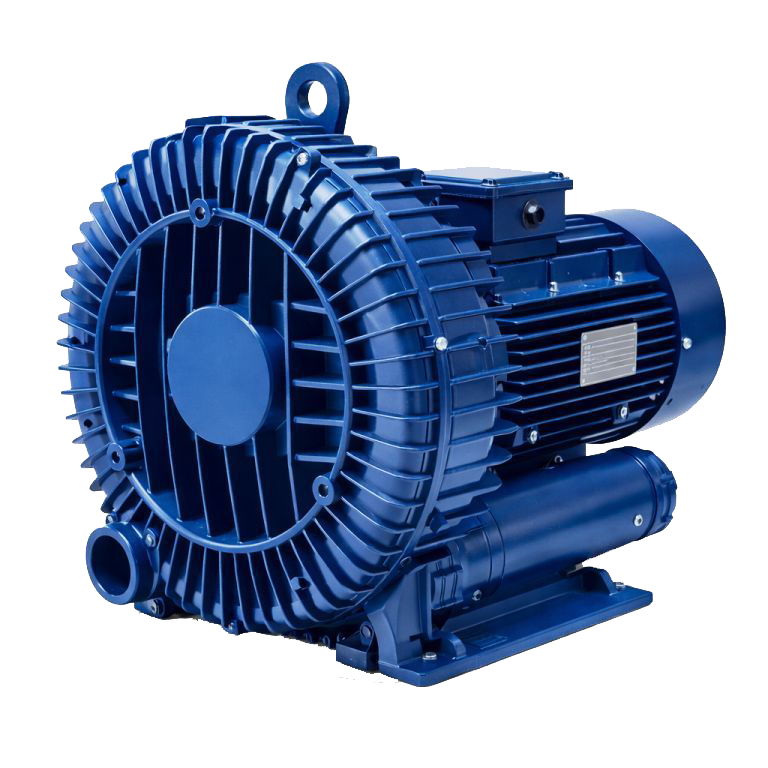
Motor Technology in Industrial Ring Blowers
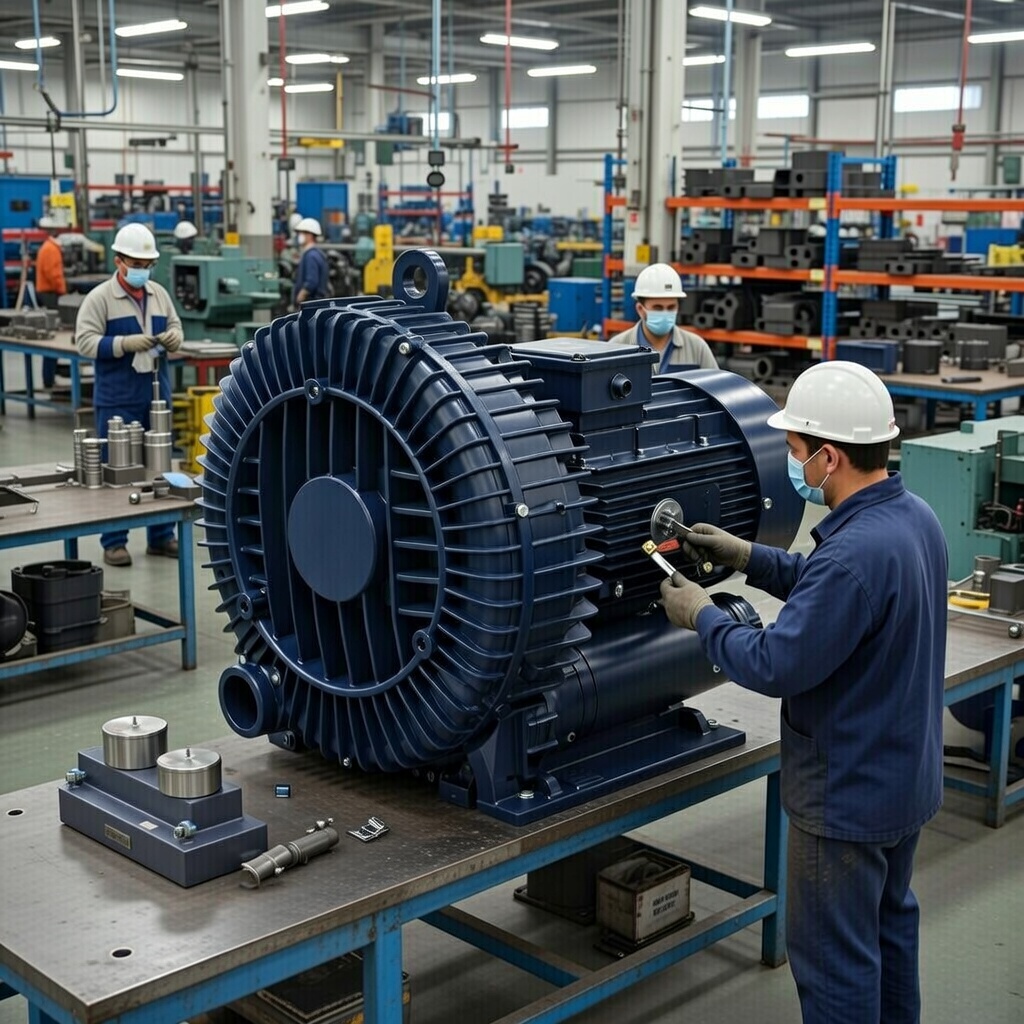
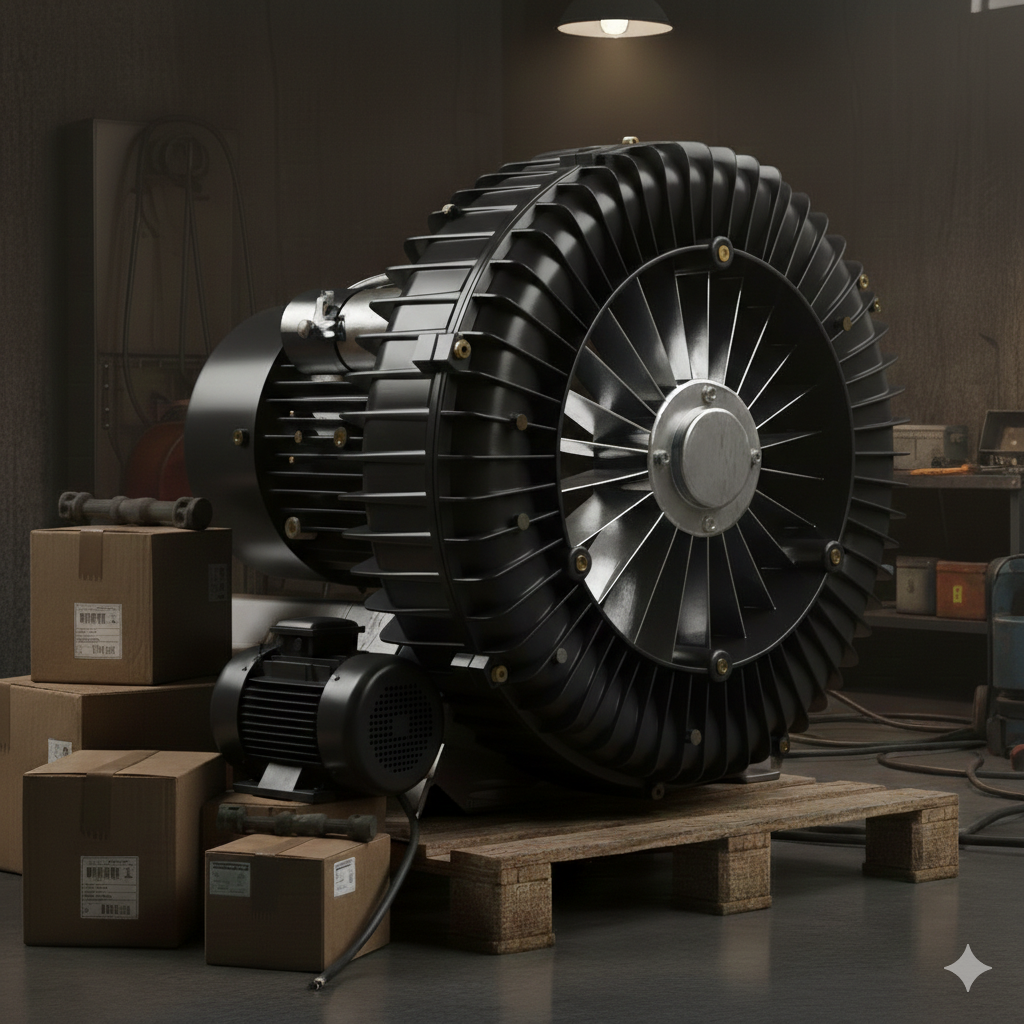
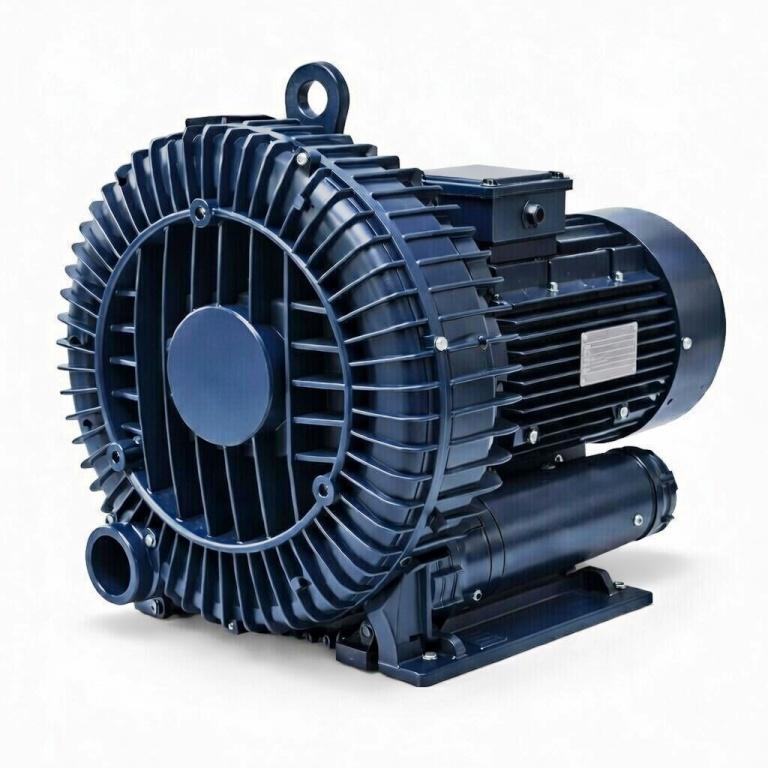
In industrial ring blowers (also known as side channel blowers or regenerative blowers), the motor is the driving force behind performance, reliability, and efficiency. A high-quality blower design is incomplete without advanced motor technology. The motor controls speed, airflow capacity, pressure generation, energy consumption, noise level, and overall system life.
This blog explains in simple language how motor technology works in ring blowers, why it matters, and how it supports modern industrial systems.
Role of the Motor in a Ring Blower
The motor is responsible for:
- Rotating the impeller
- Controlling airflow speed
- Generating pressure and vacuum
- Managing energy consumption
- Supporting continuous operation
- Ensuring stable performance
- Driving system efficiency
In simple terms:
The motor converts electrical energy into airflow power.
How Motor Technology Works in Ring Blowers
Step-by-Step Operation:
- Electrical power enters the motor
- Magnetic fields are generated inside the motor
- The rotor starts rotating
- Rotation drives the impeller
- Impeller moves air through the ring channel
- Pressure or vacuum is created
- Continuous airflow is maintained
Types of Motors Used in Industrial Ring Blowers
🔹 Induction Motors (AC Motors)
- Most commonly used
- Reliable and durable
- Low maintenance
- Cost-effective
- Suitable for continuous duty
- Industrial standard design
🔹 IE2 / IE3 / IE4 High-Efficiency Motors
- Energy-efficient classes
- Lower power consumption
- Reduced heat generation
- Lower operating costs
- Sustainable operation
🔹 Variable Frequency Drive (VFD) Motors
- Speed-controlled operation
- Adjustable airflow and pressure
- Energy savings
- Smart automation integration
- Process control compatibility
🔹 Servo & Smart Motors (Advanced Systems)
- Precision speed control
- Digital monitoring
- Smart automation support
- Industry 4.0 integration
Key Motor Design Features
⚙ High-Speed Performance
Ring blower motors operate at:
- High RPM
- Stable torque
- Continuous rotation
- Smooth acceleration
🔥 Thermal Management
Advanced motor designs include:
- Efficient cooling systems
- Heat-resistant insulation
- Thermal protection systems
- Overload protection
- Temperature sensors
🔌 Electrical Protection Systems
Motors are protected by:
- Overcurrent protection
- Voltage protection
- Short-circuit protection
- Overload cut-off
- Phase failure protection
🔇 Low Noise & Vibration Control
Motor balancing and design ensure:
- Quiet operation
- Smooth running
- Low vibration
- Reduced mechanical stress
Motor Technology and Performance Control
The motor directly controls:
| Factor | Impact |
| Airflow output | System capacity |
| Pressure generation | Performance strength |
| Energy use | Operating cost |
| Heat generation | System stability |
| Noise levels | Workplace comfort |
| Reliability | Machine life |
| Maintenance | Service cost |
| Automation | Smart integration |
Energy Efficiency Benefits
Advanced motor technology provides:
✔ Lower power consumption
✔ Reduced electricity bills
✔ High output per kW
✔ Stable performance
✔ Sustainable operation
✔ Green manufacturing
✔ ESG compliance
✔ Carbon reduction support
Industrial Applications Using Advanced Motor Systems
- Pneumatic conveying systems
- Vacuum lifting equipment
- Packaging machinery
- Wastewater treatment plants
- Aquaculture aeration
- Cleanroom systems
- Food processing plants
- Pharmaceutical industries
- Electronics manufacturing
- Printing and paper industries
- Textile processing
- Bottling plants
- Chemical processing units
Smart Motor Technology & Industry 4.0
Modern ring blowers now support:
- IoT connectivity
- Smart sensors
- Real-time monitoring
- Predictive maintenance
- Remote diagnostics
- AI-based performance optimization
- Energy analytics
- Digital twin systems
Safety Advantages of Advanced Motor Systems
- Overheat protection
- Overload protection
- Auto shut-down systems
- Fault detection
- Fire risk reduction
- Electrical safety
- Machine protection
- Operator safety
Future of Motor Technology in Ring Blowers
Future developments include:
- Smart motors with AI control
- Digital twin motors
- Ultra-efficient magnetic systems
- Sensor-integrated motors
- Self-cooling motors
- Adaptive speed motors
- Carbon-neutral motor designs
- Smart energy motors
- Maintenance-free motors
Conclusion
Motor technology is the backbone of industrial ring blower performance.
It controls:
- Airflow
- Pressure
- Efficiency
- Reliability
- Noise
- Heat
- Maintenance
- Automation compatibility
- System intelligence
Modern ring blower motors deliver:
- High efficiency
- Low energy consumption
- Long life
- Continuous duty performance
- Smart control
- Low noise
- Industrial reliability
- Sustainable operation
In simple words:
A powerful, efficient motor creates a powerful, efficient ring blower.

Leave A Comment